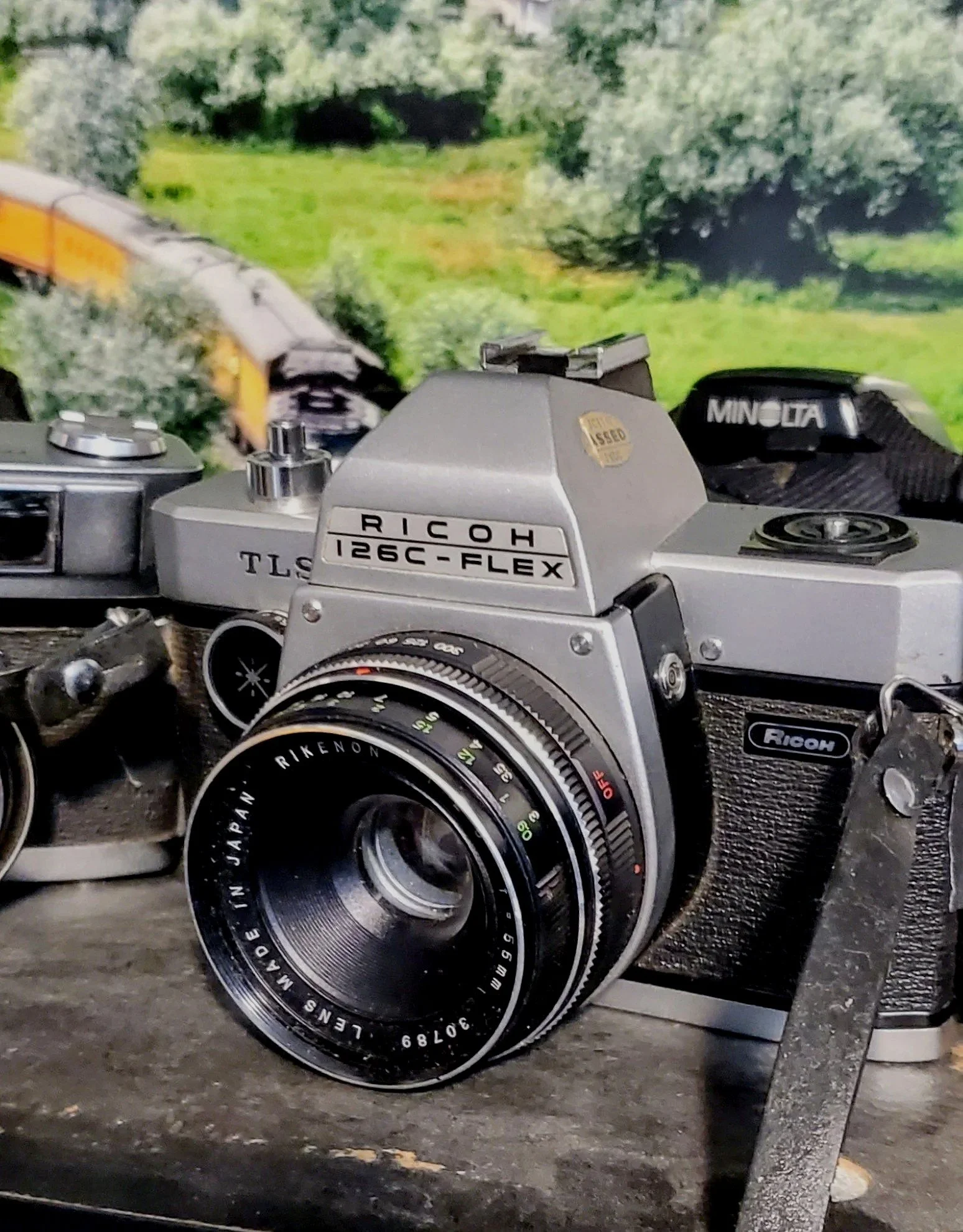
Blog # 6: The SLR That Could Have Saved the 126: A Look at the Ricoh 126C Flex
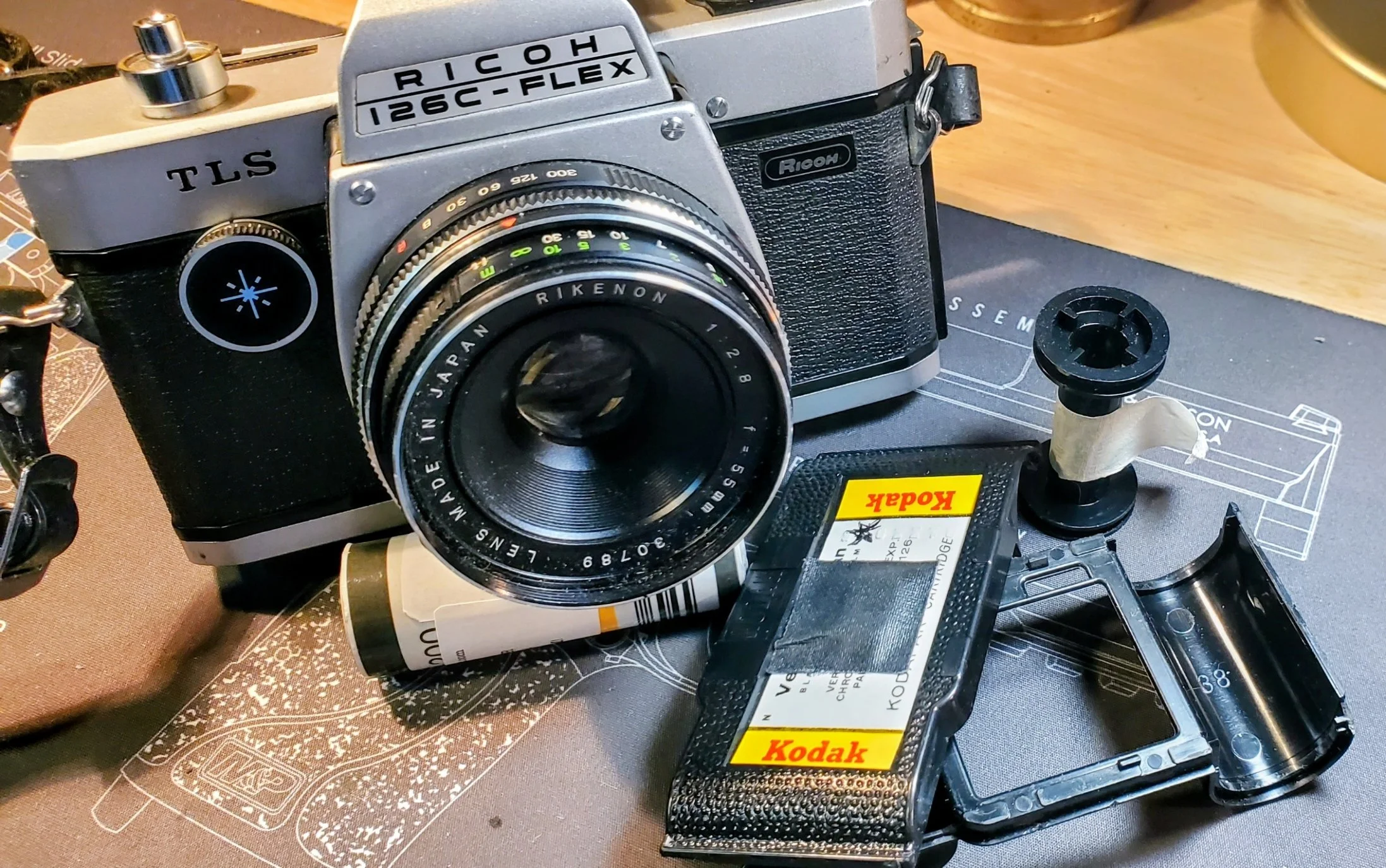
Ricoh 126C Flex and the Kodak cartridge. This is the best 126 Combo I have found.
As my search for the ultimate 126 cartridge camera continues, I recently crossed paths with the Ricoh 126C Flex. It is a striking SLR that manages to mirror the beauty and build quality of a professional 35mm machine, all while utilizing the simplicity of a 126 cartridge.
I’ve always maintained that the 126 format could have had a bright future. It was easy to load, allowed photographers to swap between color and black-and-white mid-roll with ease, and produced those charming square prints. These were revolutionary concepts that served a real purpose in the evolution of photography. In fact, the format had impressive staying power, hanging around from 1963 until the final rolls were produced in 2007.
A Rare Breed of SLR
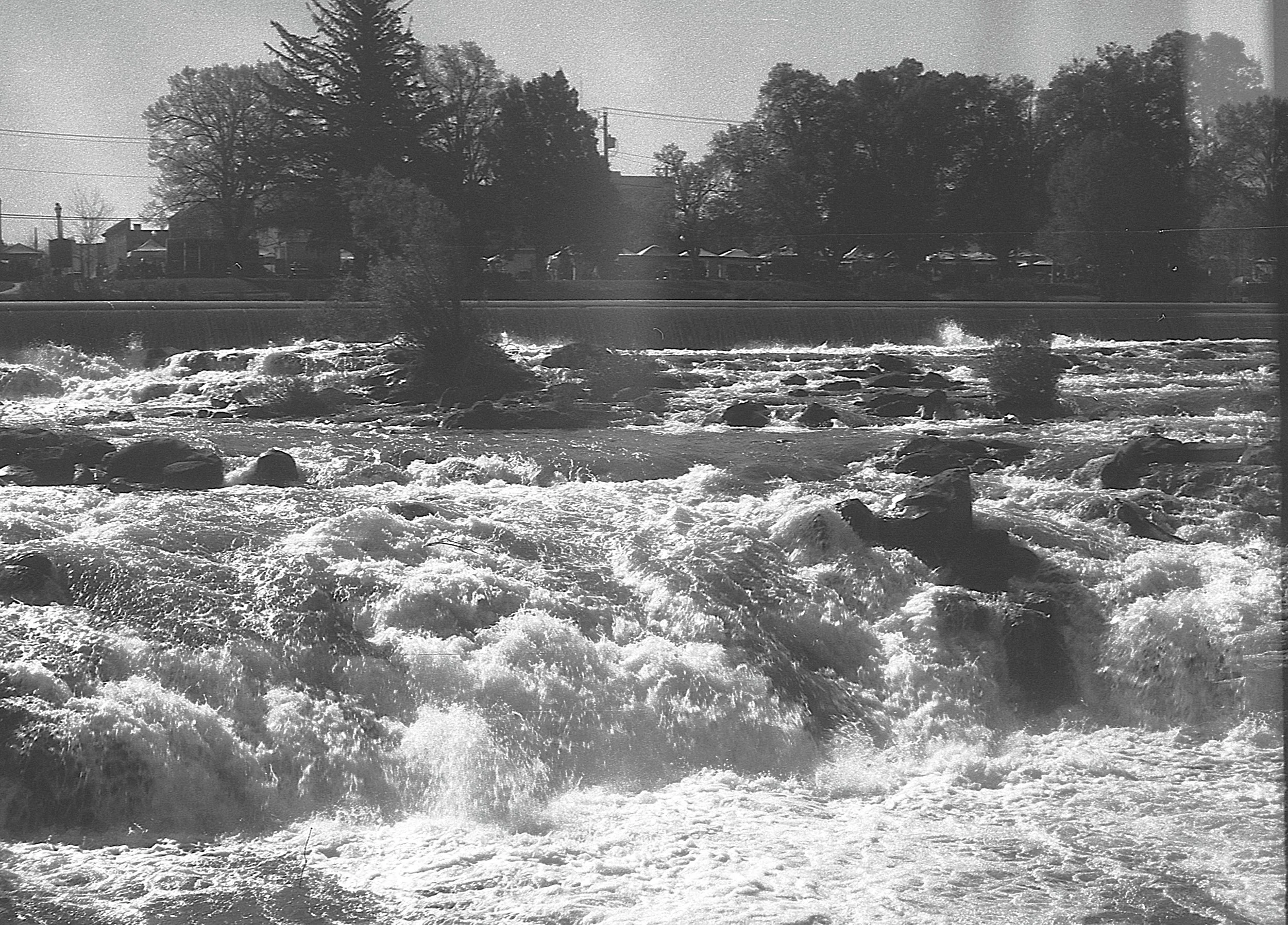
The Snake River at Eagle Island on Farmers Market Day. The Kodak Cartridge I used has a slight light leak. But I have used this cartridge 9 times.
Today, few people realize that a handful of camera companies tried to elevate the 126 cartridge world by stepping into SLR territory. The 126C Flex was one of those rare ambitious projects, but very few of these SLRs were produced, and even fewer remain functional today.
This is actually my fifth attempt at owning a 126 cartridge SLR, and I’ll tell you: it’s the only one that actually works. While I have nearly thirty different 126 Instamatic cameras that perform well with a good cartridge, the SLRs are notoriously temperamental.
Keeping these machines alive is a labor of love for Dr. Frankinfilm. I still load my own film into salvaged cartridges, which often requires a surgical amount of gaff tape on the ends, sides And on the film doors to keep everything light-tight. I even have to double tape over the old number counter window. It’s a pain, but watching these old cameras "tick" back to life makes every strip of tape worth it.
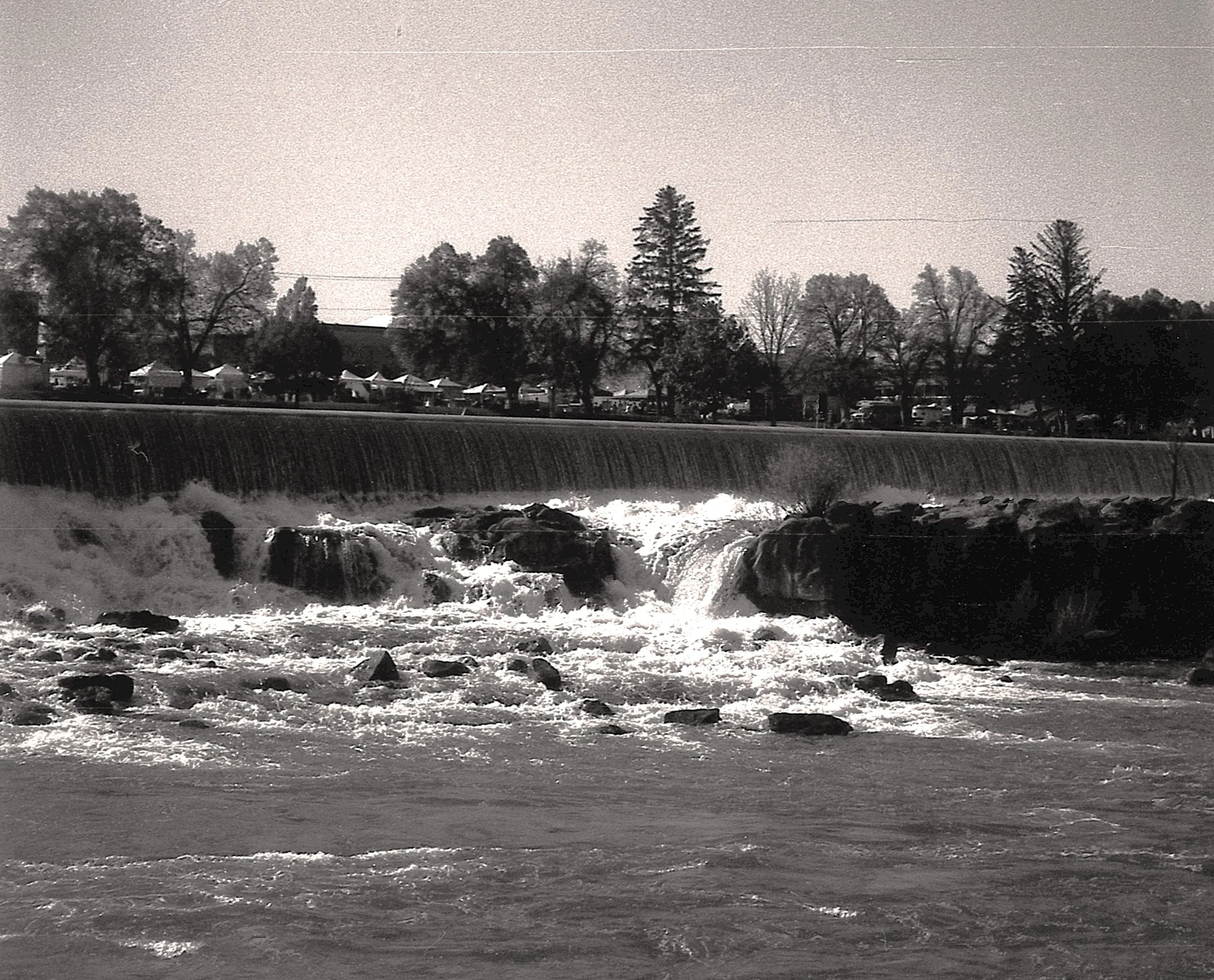
The glass on this Ricoh is much sharper than the plastic instamatic 126s. When loading film in the 126 cartridge be extra careful. It is easy to scratch the film. I don’t think the camera caused these scratches.
The eBay Gamble
This Ricoh was another eBay find. When you're hunting for these, you have to run through a gauntlet of "20 questions" before hitting that "commit" button.
The Battery Compartment: Is it clean or corroded?
The Shutter: Does it actually fire?
The Glass: How does the lens look?
Often, you’re dealing with a seller who doesn't even know the difference between a 126 and a 35mm. Once you start asking technical questions, they often stop replying—after all, who wants to spend an hour on customer service for a $12.99 sale? With this Ricoh, the communication was sparse, and I eventually just had to click the button and hope for the best.
Technical Quirks and Semi-Pro Dreams
Fortune favored the bold this time; even the light meter was working. I swapped in a modern 1.55v battery, and the shutter-priority light meter sprang to life. One unique quirk of this camera is the dual-slot battery compartment; the flash cube requires its own, much larger battery, which I haven’t tested yet.
The 126C Flex was clearly designed for the "semi-pro" crowd:
Interchangeable Glass: Unlike most 126 cameras, this Ricoh features removable lenses, including telephoto and wide-angle options.
The Viewfinder: It’s easy to use, featuring a square field of view with a little red dot in the bottom left that warns you when lighting is poor.
Professional Touches: It includes a hot-shoe with a flash sync hook-up—a definite wink to more serious photographers.
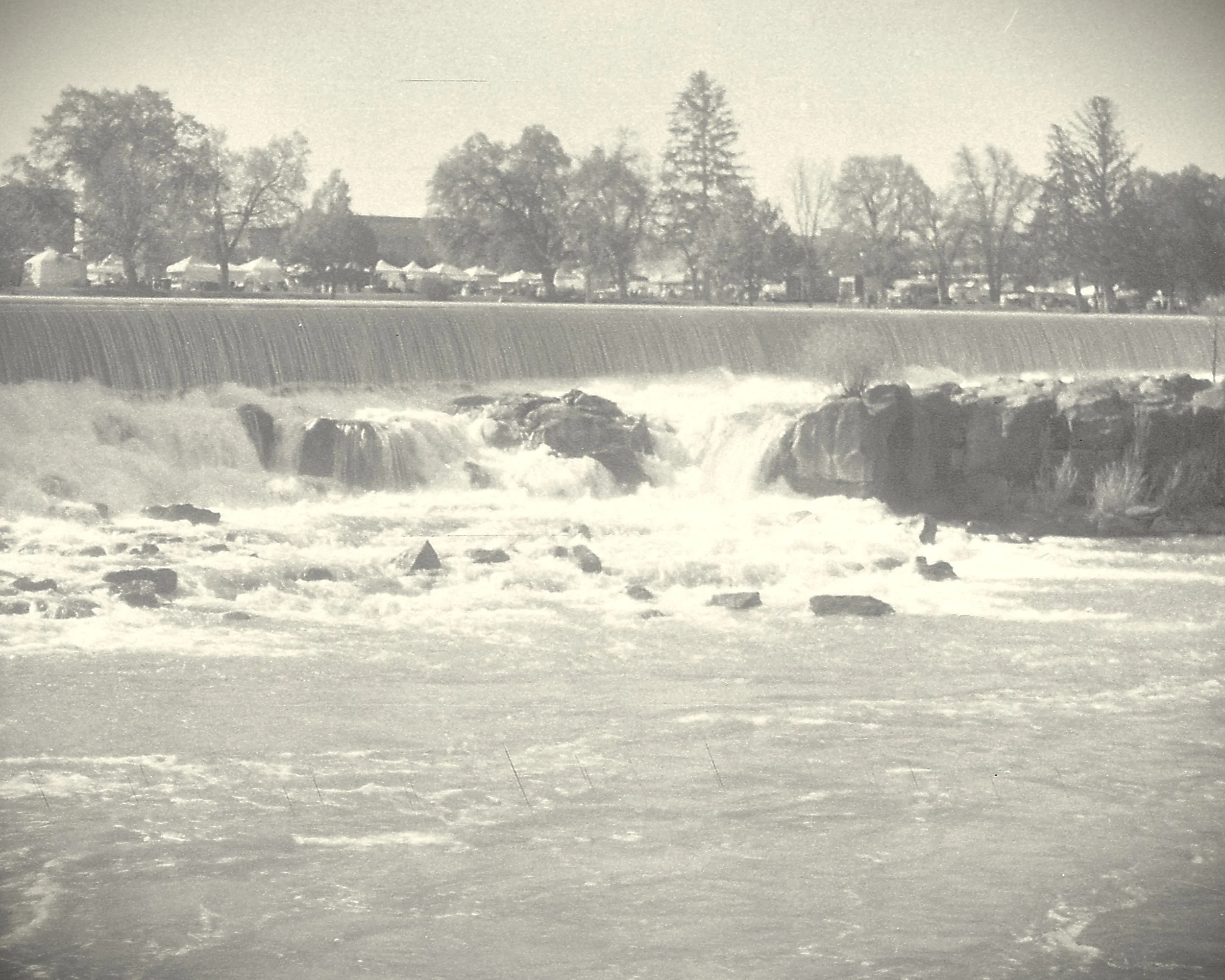
Nearly identical to the previous one, this was an experiment with a slow shutter speed to see if I could capture water movement. The water movement was captured but overall slightly washed out.
While the shutter speeds are somewhat limited, it’s a capable camera that gets the job done. These cameras (sometimes rebranded for Sears) always featured surprisingly good glass.

This is one of my favorites from this roll of film, No light leaks, and sharp.
The End of an Era
The death of the 126 wasn’t an overnight event. It was far more convenient than threading roll film, but it couldn't compete with the rising tide of 35mm. As 35mm technology improved and compact point-and-shoots became popular, consumers moved toward the larger negative for more "real estate" that 35mm offered.
Technology and shifting tastes eventually won out, but these cameras are still around today. If you’re looking to shoot one, the Film Photography Project still stocks perforated 126 film that can be loaded into a FakMatic or a salvaged original cartridge. Personally, I prefer the original cartridges, though they can be quite a challenge to open without cracking or breaking the plastic and this is the light-leak problem that plaques these cameras. .

The Broadway Bridge over the Snake at Eagle Island.
In the end, the Ricoh 126C Flex stands as a testament to a time when the 126 format had the ambition to be something more than just an "instamatic" snapshot—it was a bridge to becoming an enterprise photographer.