Blog # 6: The SLR That Could Have Saved the 126: A Look at the Ricoh 126C Flex
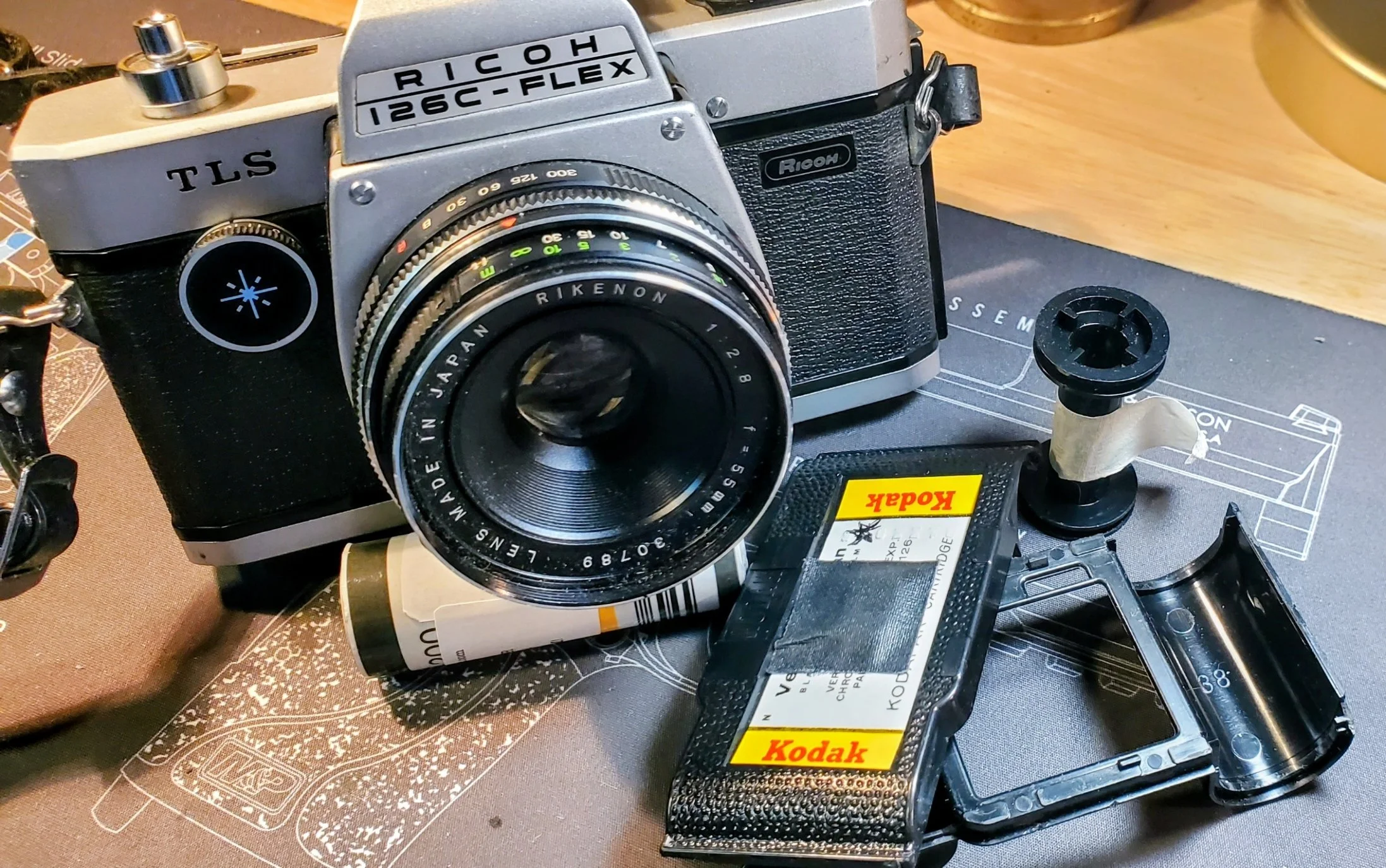
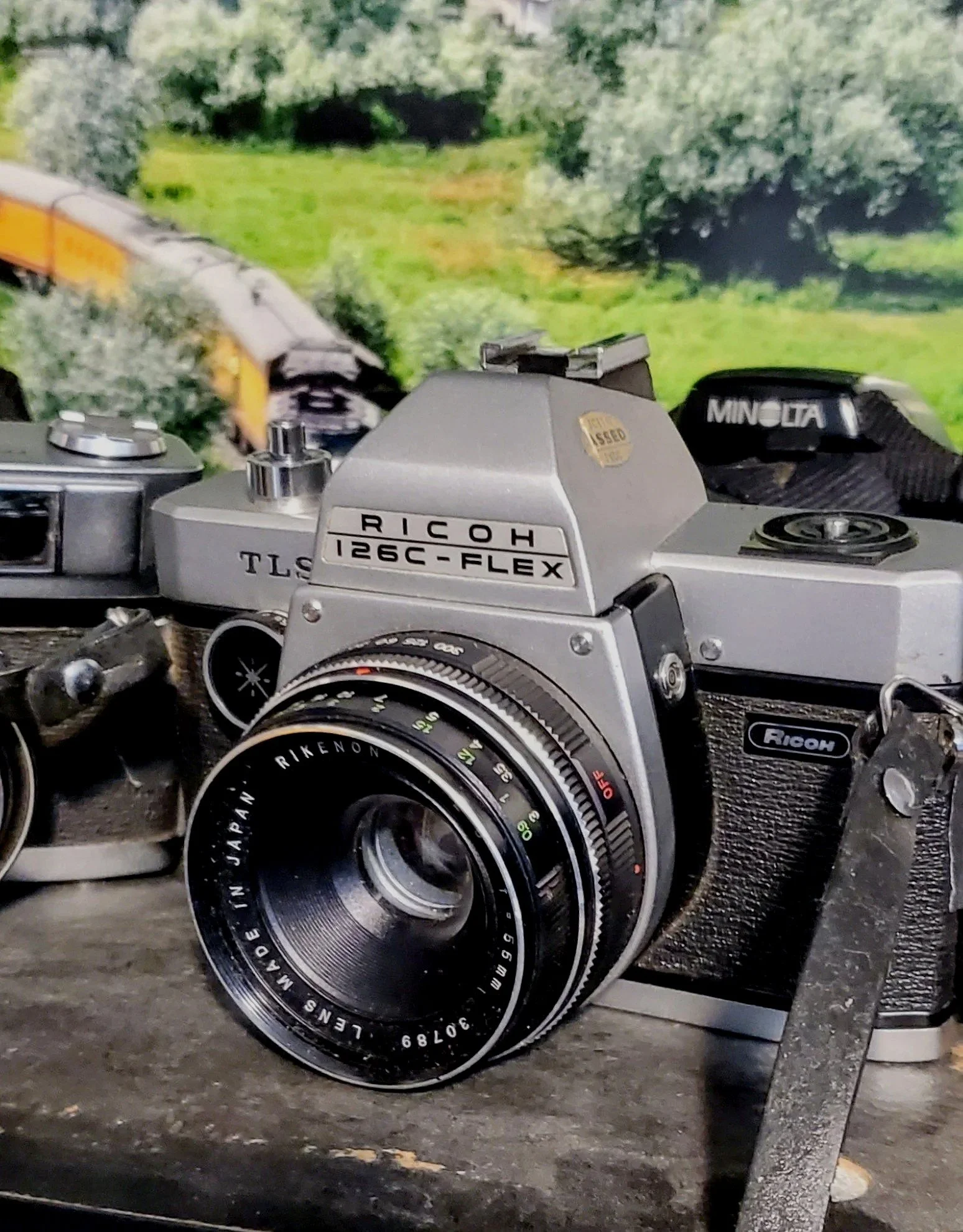
Ricoh 126C Flex and the Kodak cartridge. This is the best 126 Combo I have found.
As my search for the ultimate 126 cartridge camera continues, I recently crossed paths with the Ricoh 126C Flex. It is a striking SLR that manages to mirror the beauty and build quality of a professional 35mm machine, all while utilizing the simplicity of a 126 cartridge.
I’ve always maintained that the 126 format could have had a bright future. It was easy to load, allowed photographers to swap between color and black-and-white mid-roll with ease, and produced those charming square prints. These were revolutionary concepts that served a real purpose in the evolution of photography. In fact, the format had impressive staying power, hanging around from 1963 until the final rolls were produced in 2007.
A Rare Breed of SLR
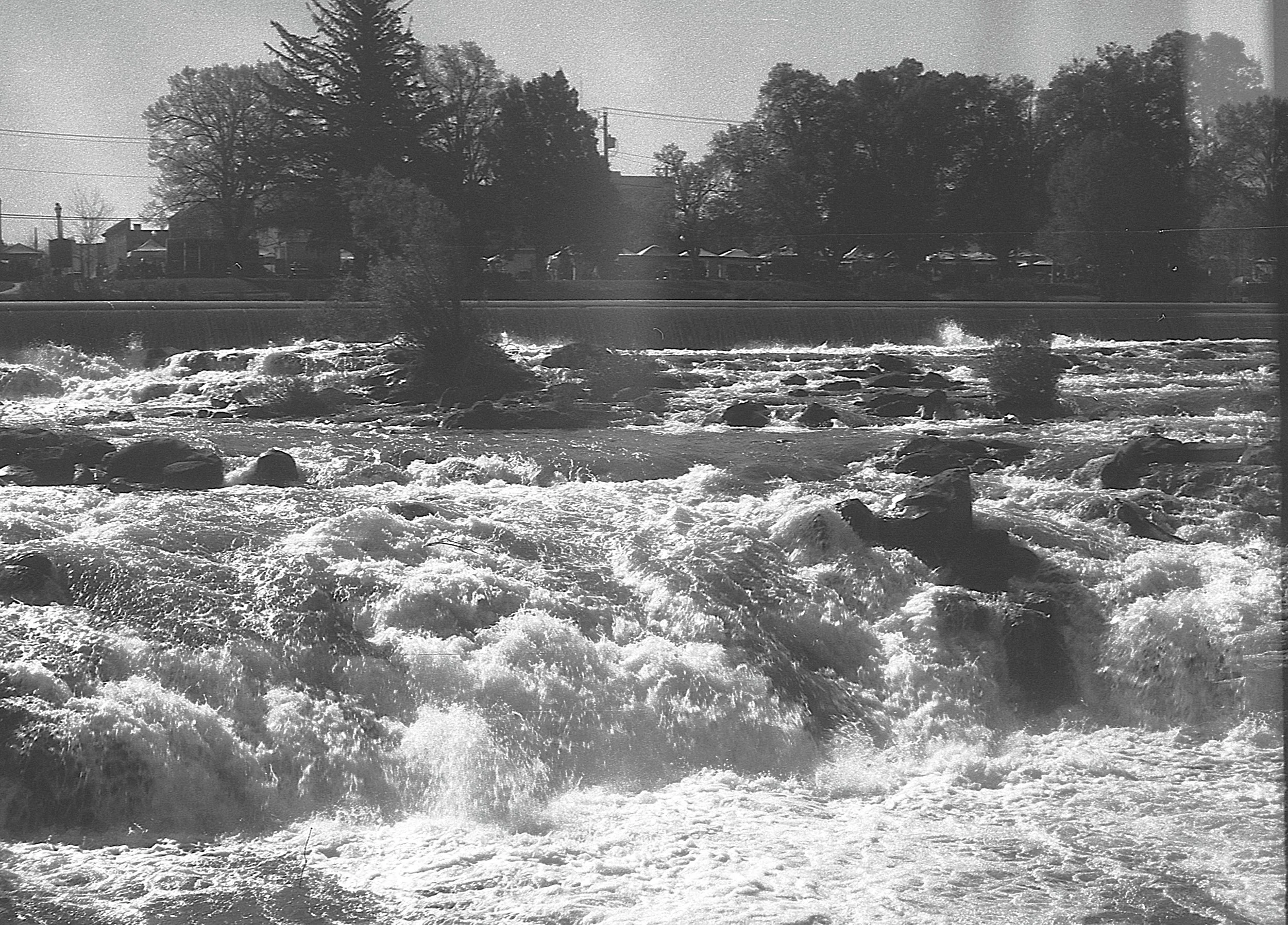
The Snake River at Eagle Island on Farmers Market Day. The Kodak Cartridge I used has a slight light leak. But I have used this cartridge 9 times.
Today, few people realize that a handful of camera companies tried to elevate the 126 cartridge world by stepping into SLR territory. The 126C Flex was one of those rare ambitious projects, but very few of these SLRs were produced, and even fewer remain functional today.
This is actually my fifth attempt at owning a 126 cartridge SLR, and I’ll tell you: it’s the only one that actually works. While I have nearly thirty different 126 Instamatic cameras that perform well with a good cartridge, the SLRs are notoriously temperamental.
Keeping these machines alive is a labor of love for Dr. Frankinfilm. I still load my own film into salvaged cartridges, which often requires a surgical amount of gaff tape on the ends, sides And on the film doors to keep everything light-tight. I even have to double tape over the old number counter window. It’s a pain, but watching these old cameras "tick" back to life makes every strip of tape worth it.
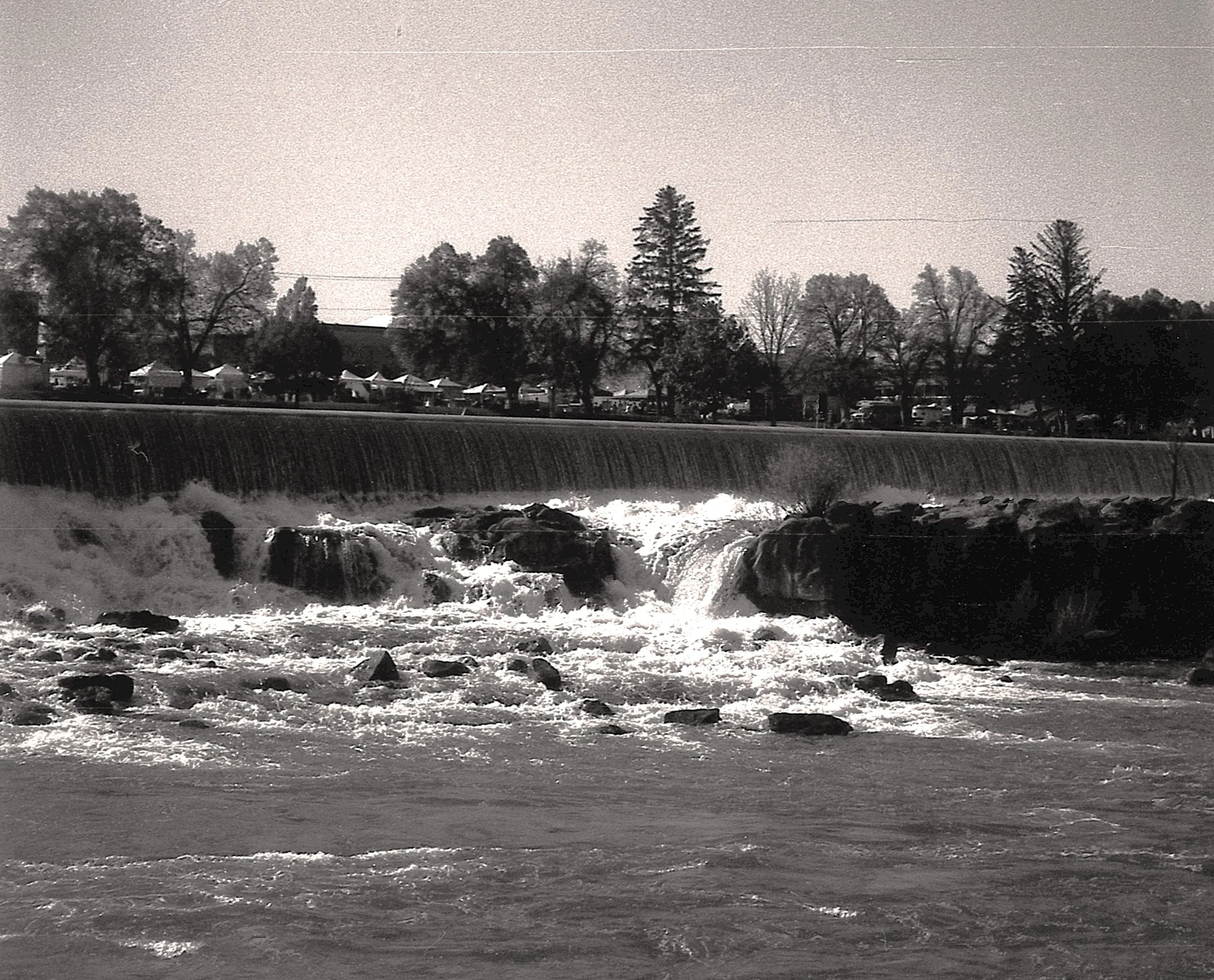
The glass on this Ricoh is much sharper than the plastic instamatic 126s. When loading film in the 126 cartridge be extra careful. It is easy to scratch the film. I don’t think the camera caused these scratches.
The eBay Gamble
This Ricoh was another eBay find. When you're hunting for these, you have to run through a gauntlet of "20 questions" before hitting that "commit" button.
The Battery Compartment: Is it clean or corroded?
The Shutter: Does it actually fire?
The Glass: How does the lens look?
Often, you’re dealing with a seller who doesn't even know the difference between a 126 and a 35mm. Once you start asking technical questions, they often stop replying—after all, who wants to spend an hour on customer service for a $12.99 sale? With this Ricoh, the communication was sparse, and I eventually just had to click the button and hope for the best.
Technical Quirks and Semi-Pro Dreams
Fortune favored the bold this time; even the light meter was working. I swapped in a modern 1.55v battery, and the shutter-priority light meter sprang to life. One unique quirk of this camera is the dual-slot battery compartment; the flash cube requires its own, much larger battery, which I haven’t tested yet.
The 126C Flex was clearly designed for the "semi-pro" crowd:
Interchangeable Glass: Unlike most 126 cameras, this Ricoh features removable lenses, including telephoto and wide-angle options.
The Viewfinder: It’s easy to use, featuring a square field of view with a little red dot in the bottom left that warns you when lighting is poor.
Professional Touches: It includes a hot-shoe with a flash sync hook-up—a definite wink to more serious photographers.
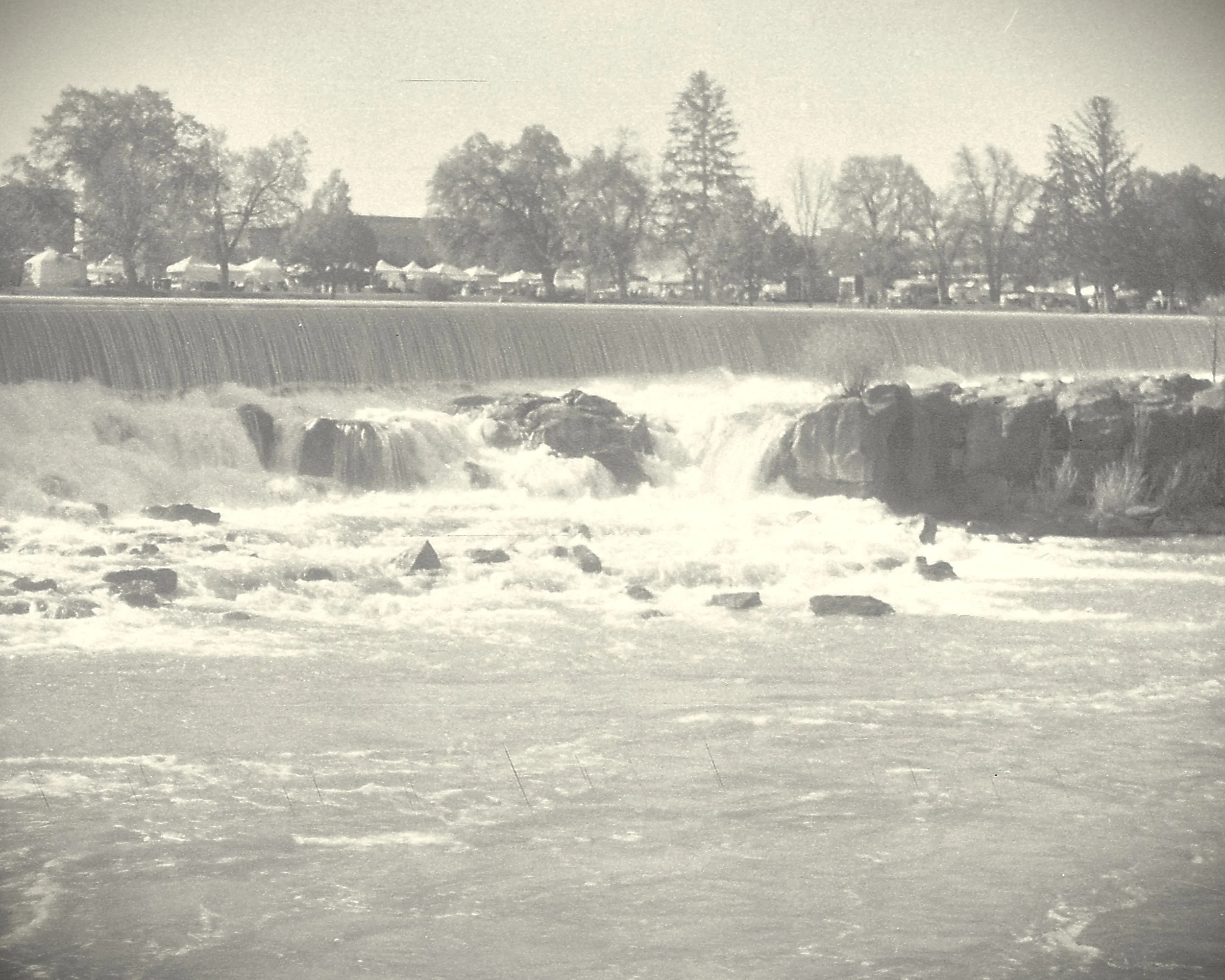
Nearly identical to the previous one, this was an experiment with a slow shutter speed to see if I could capture water movement. The water movement was captured but overall slightly washed out.
While the shutter speeds are somewhat limited, it’s a capable camera that gets the job done. These cameras (sometimes rebranded for Sears) always featured surprisingly good glass.

This is one of my favorites from this roll of film, No light leaks, and sharp.
The End of an Era
The death of the 126 wasn’t an overnight event. It was far more convenient than threading roll film, but it couldn't compete with the rising tide of 35mm. As 35mm technology improved and compact point-and-shoots became popular, consumers moved toward the larger negative for more "real estate" that 35mm offered.
Technology and shifting tastes eventually won out, but these cameras are still around today. If you’re looking to shoot one, the Film Photography Project still stocks perforated 126 film that can be loaded into a FakMatic or a salvaged original cartridge. Personally, I prefer the original cartridges, though they can be quite a challenge to open without cracking or breaking the plastic and this is the light-leak problem that plaques these cameras. .
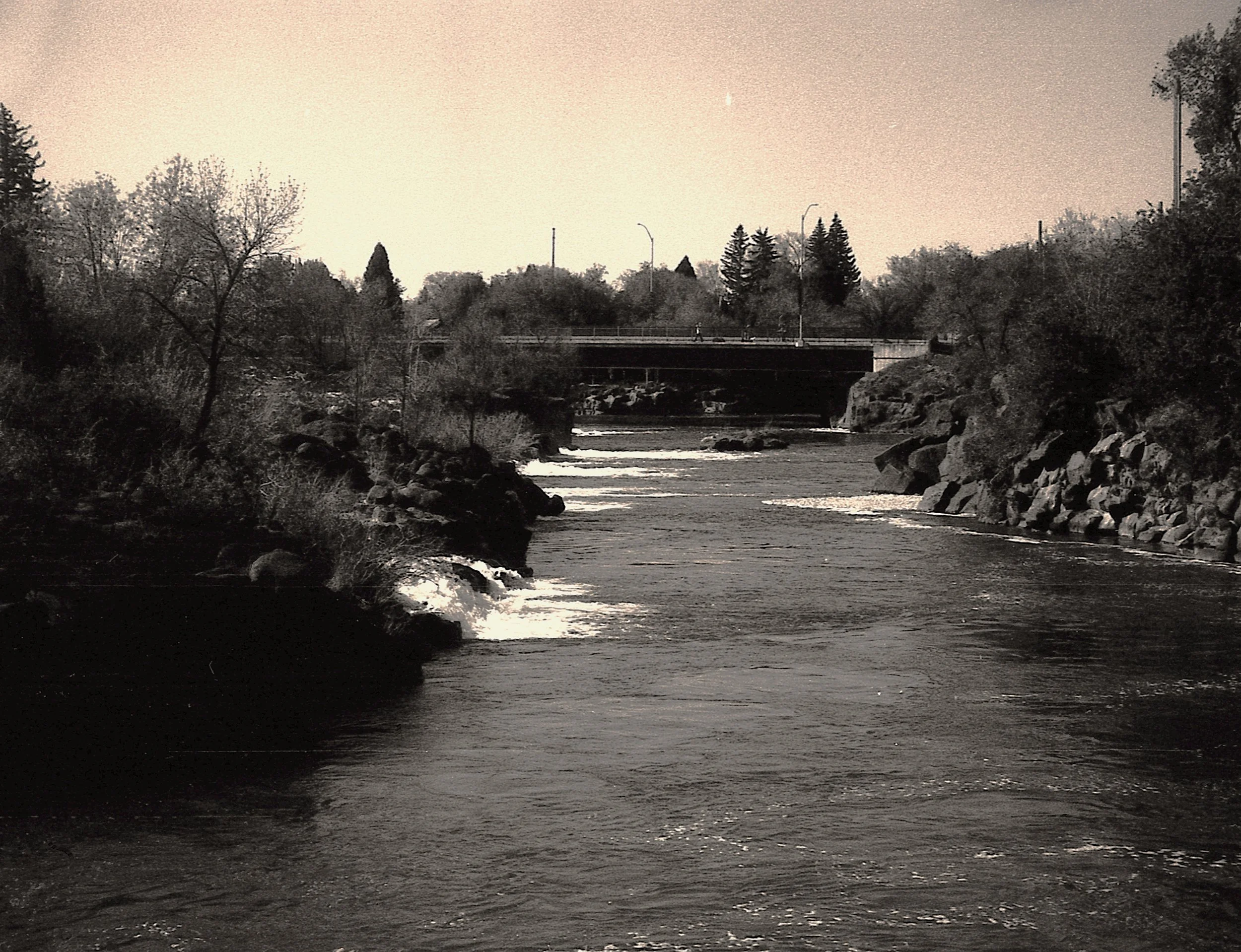
The Broadway Bridge over the Snake at Eagle Island.
In the end, the Ricoh 126C Flex stands as a testament to a time when the 126 format had the ambition to be something more than just an "instamatic" snapshot—it was a bridge to becoming an enterprise photographer.
Blog # 5 -The 3rd Generation Brick: A Legacy in Black & White
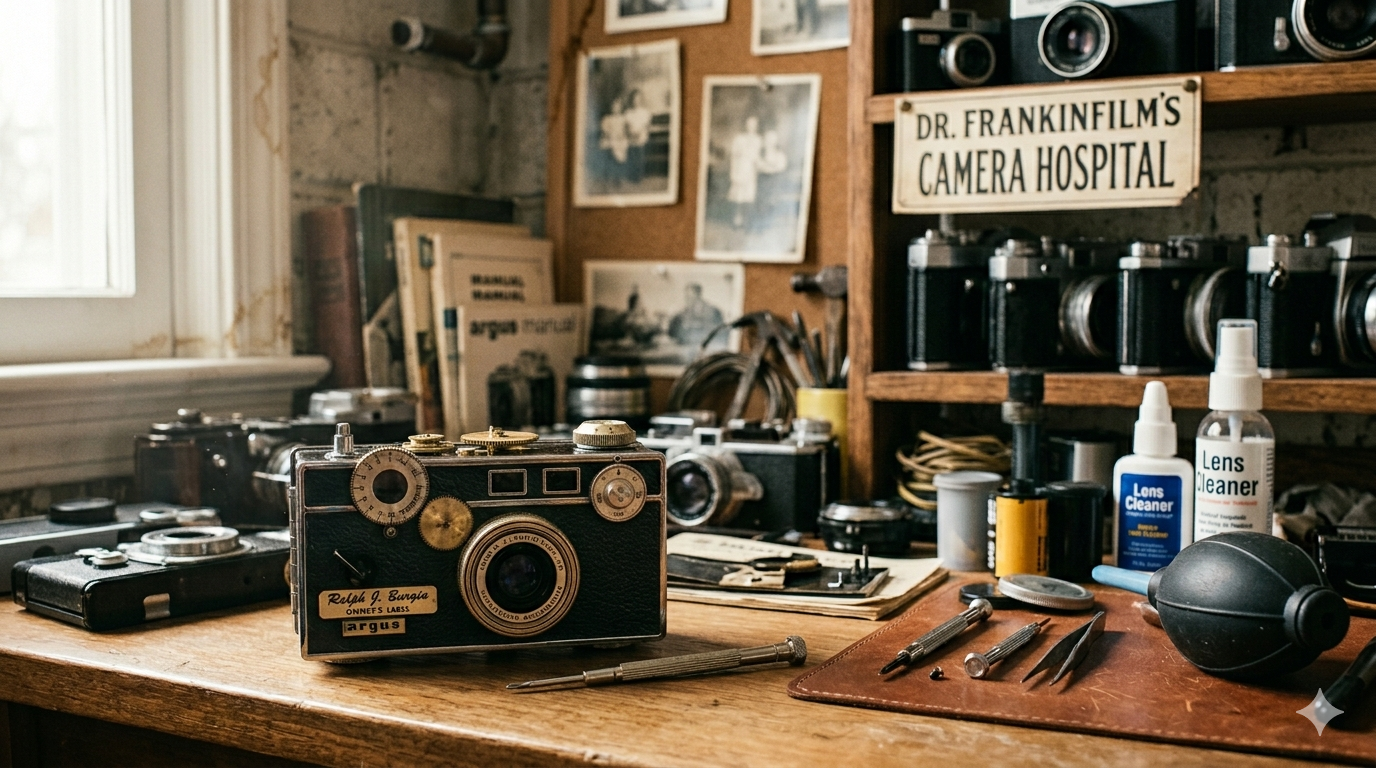
Author’s AI rendition of Dr. Frankinfilm’s work bench
Argus C3
It is a quiet marvel how cameras linger. They are physical anchors of memory that refuse to fade, even as they pass from one hand to another. Such is the case with this Argus C3, the boxy, "steampunk-like" rangefinder affectionately known as the "Brick".
Popular from its 1939 conception through 1966, the C3 was a heavy metal workhorse for the masses. With over two million produced, it’s a camera often found at the bottom of a collector's box, yet its rugged simplicity makes it a favorite for those of us who enjoy the art of restoration. Its distinct exterior—a landscape of visible gears and manual dials for focus, film advance, and shutter speeds—requires a certain level of tactile dexterity to master.
A Davenport/Burgin Heirloom
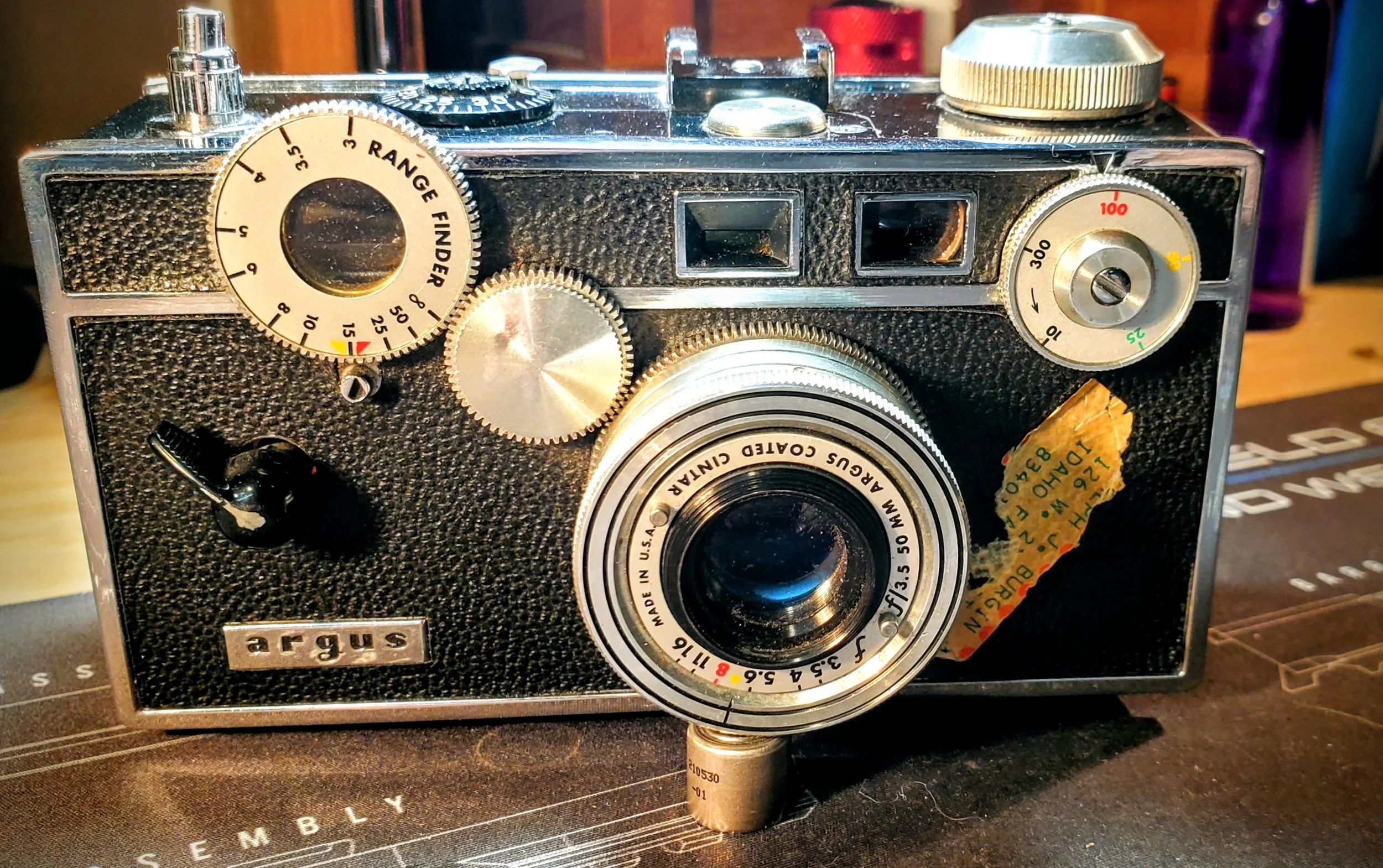
Grandpa’s Argus C3 with his address label and name still sticking.
This specific third-generation C3 carries a weight far beyond its metal chassis. It began with my Grandpa Burgin, the likely eye behind the countless black-and-white photos that fill our family albums. From him, it passed to my father (his Son-in-lsw). By the time Dad received it, the "Brick" was technically outdated; Dad was already a devotee of the Olympus system. Yet, he kept the C3 for decades, anchored by its sentimental gravity.
The camera eventually traveled to my younger brother, Eric, where it sat in a box, nearly forgotten in an era where film was fading. But Davenport tradition dictates a specific destination for such relics: they come to the workbench of Dr. Frankinfilm. When it finally reached my hands, still bearing the original owner's name sticker, I felt a poignant mix of sadness for its years in exile and excitement for its new status as a multi-generational heirloom. It received a minor clean and lube and it was ready to go again.
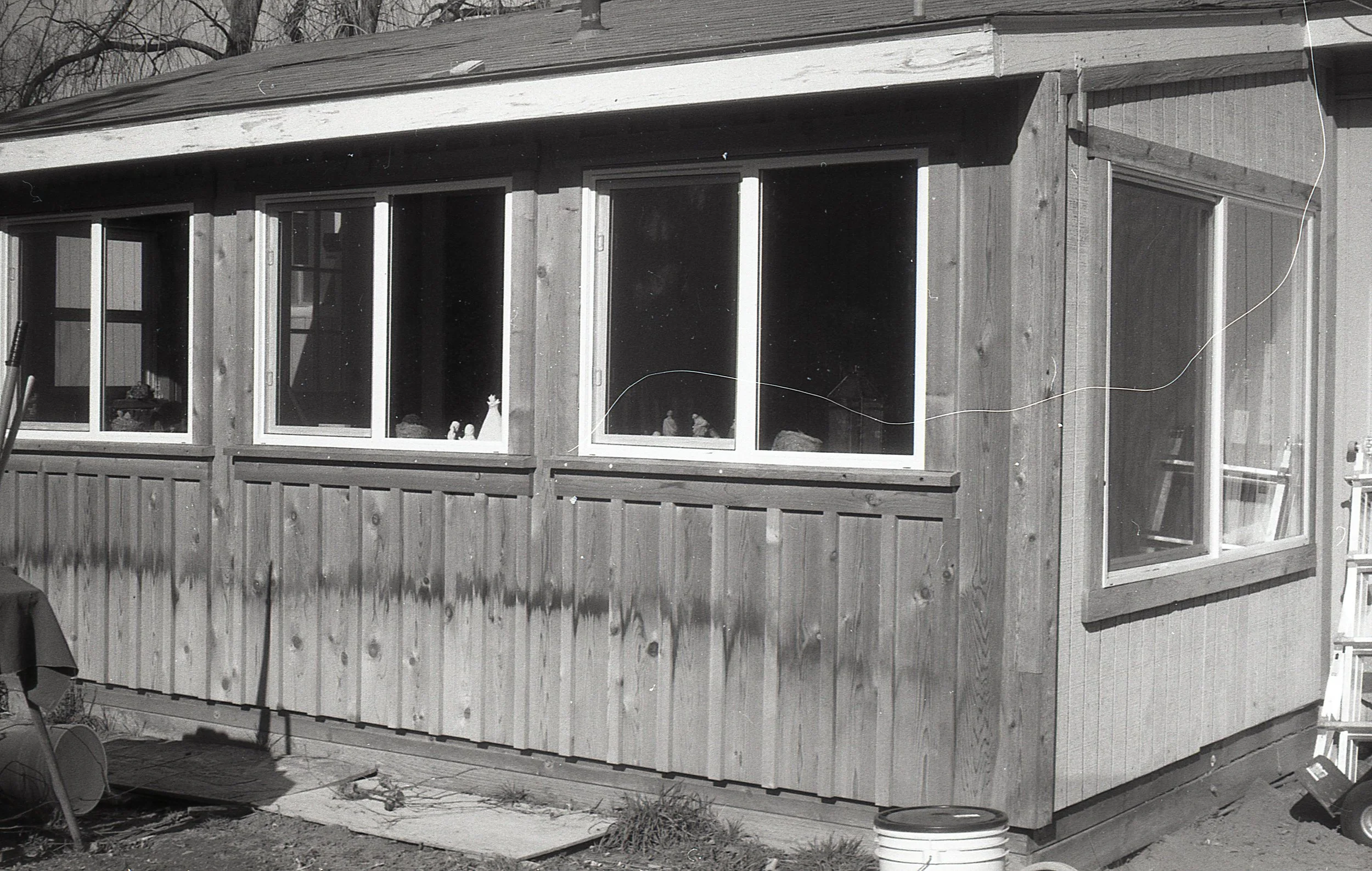
Dad’s patio turned into an enclosed sunroom.
Dad’s Last Roll: The Legend Returns
My father has always had a camera since the 1950s, yet thirty years had passed since he last shot a single frame. As he approaches his 92nd year, I decided to bridge that silence. I handed him the Argus and asked for one more roll—what I’ve called 'Dad’s Last Roll of Film.' It may not truly be his final roll, but this particular study in FPP Wolfman black and white 100 captured something timeless. The camera still has a great sharp lens.
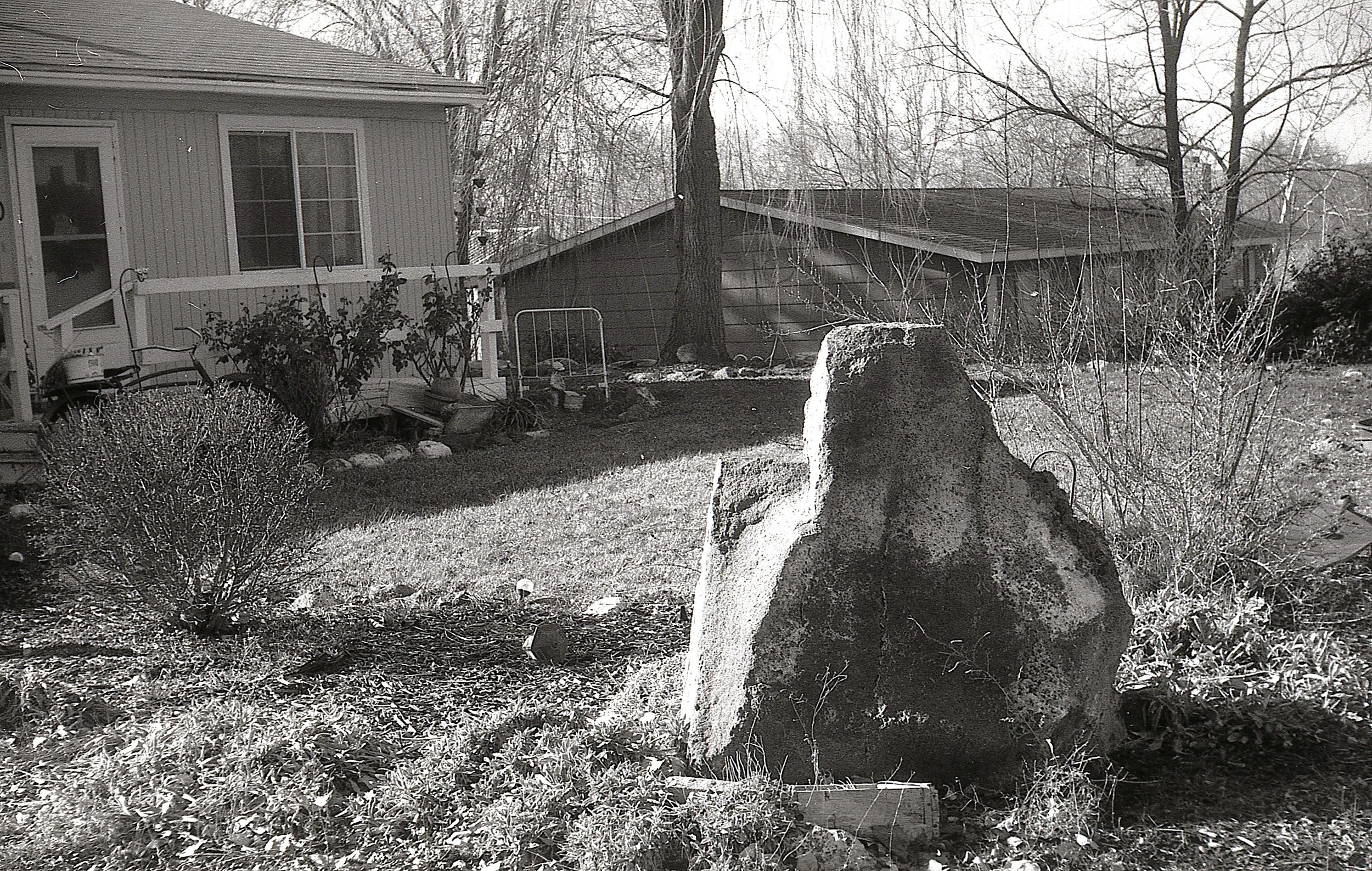
Dad’s front yard
Despite the "quirks" of the C3—like the manual reset of the frame counter—the legend’s muscle memory was intact. Though he only captured six frames before the camera seemingly reached its limit, the results are priceless in composition.
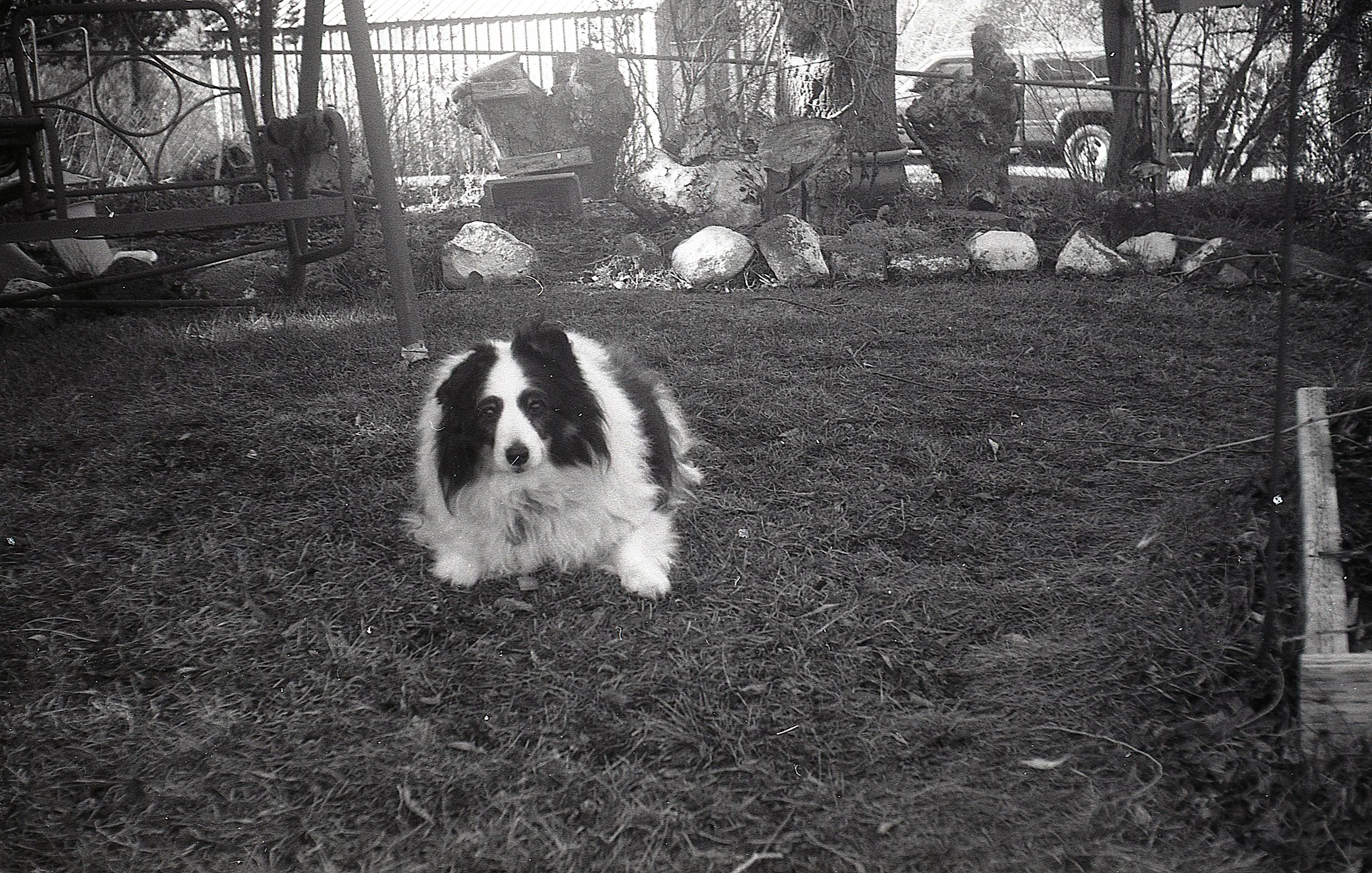
Dad and Missy are inseparable
The standout image, which I’ve titled "Dad’s Quiet Corner," is almost a self-portrait. It captures his favorite sanctuary: a sunroom converted from a patio, featuring his rocking chair, a warm blanket, and a stack of books for an avid reader. Even his faithful walking partner, Missy the dog, is there, watching over him.
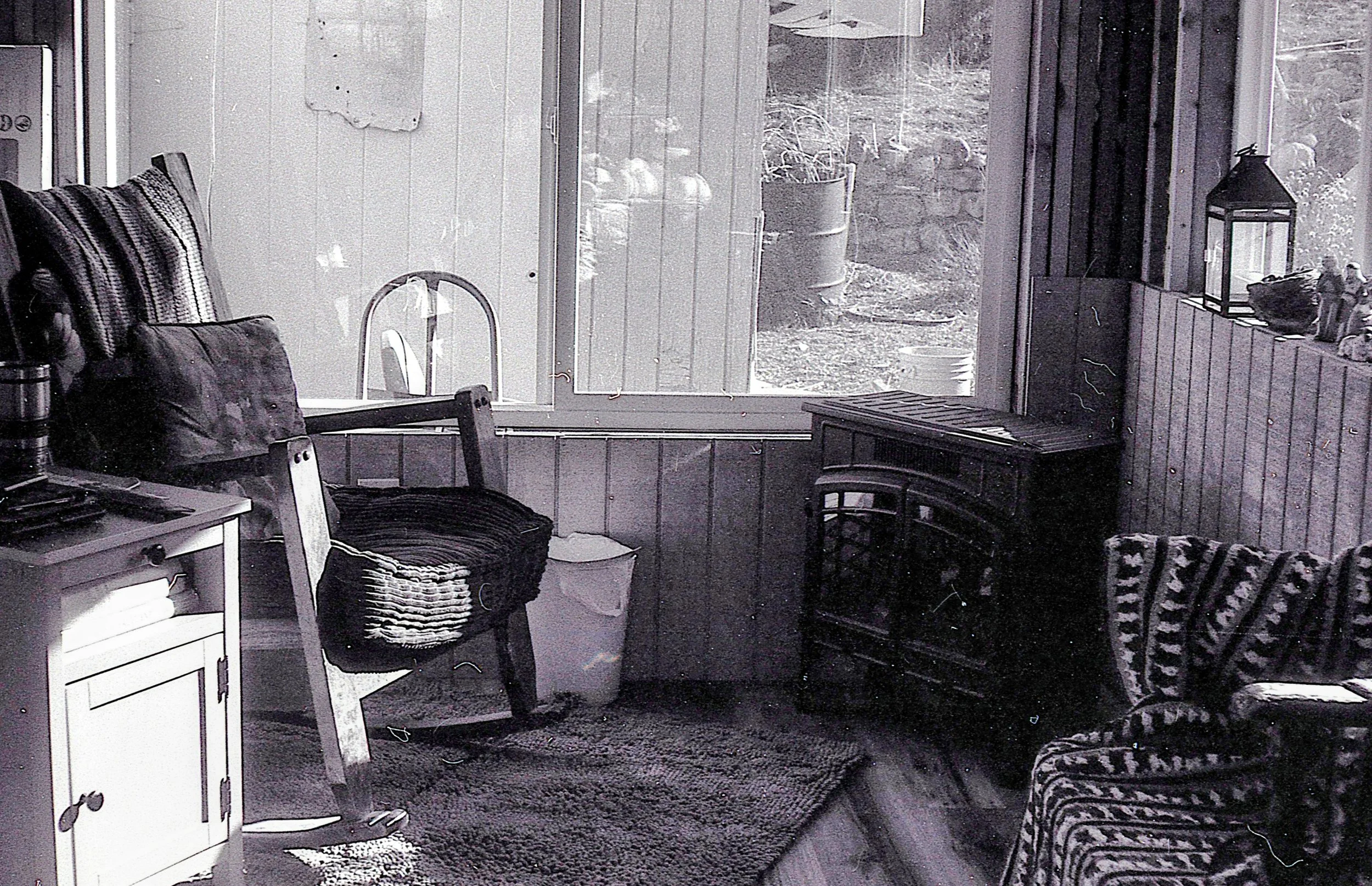
Dad’s Quiet Corner
The Dr. Frankinfilm Prescription
As a restorer, I keep spare Argus C3 parts on hand to ensure these heirlooms stay alive. But we don't just save the machines; we save the craft. Seeing my father frame a perfect indoor exposure with a "relic" from 1939 reminds me that a true photographer’s eye never loses its light. And his special place for quiet times seems fitting for his last roll of film. This Argus C3 is no longer just a "Brick"—it is a bridge to the man who spent a lifetime teaching me to see the world through a lens
Blog No. 4: Olympus Quickmatic EEM
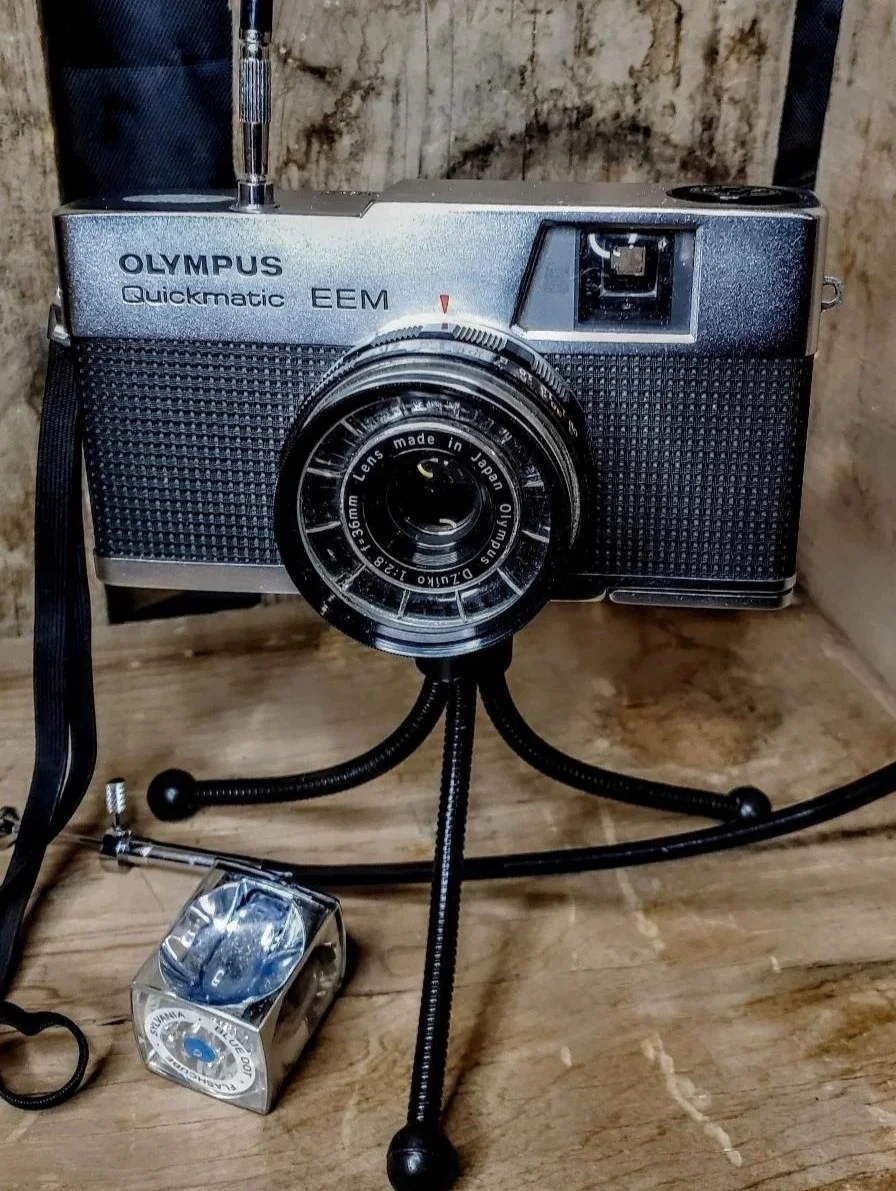
Olympus Quickmatic EEM 126 Cartridge Camera
(Finding the Best 126 Camera — Part II)
I’ve been on a bit of a mission lately—to find the best 126 cartridge camera. Not just any camera, but one that balances ease of use, sharpness, build quality, and aesthetics. In a previous article (Part I), I explored several options, but the search continues. There are, quite literally, hundreds of these little 126 cartridge cameras out there. It seems Kodak tried to corner the market by releasing a new model for every idea they could dream up.
This time, my search led me to the Olympus Quickmatic EEM.
The Rise of 126 Film
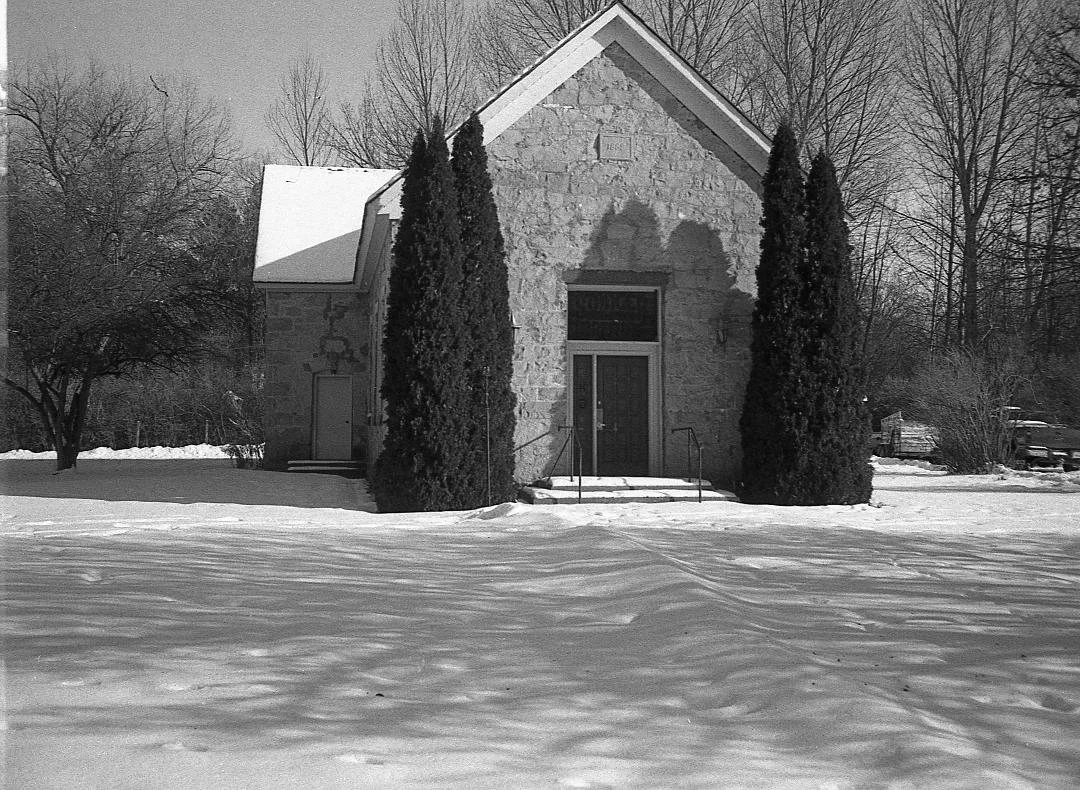
Church: Ucon, Idaho
When Kodak introduced the 126 cartridges, simplicity was the goal. Load the film, close the back, and you were ready to shoot. No threading, no fuss. Kodak believed this format would bring photography to the masses—and they were right.
The format exploded in popularity. Camera manufacturers around the world jumped in, and even corporations began branding Instamatic cameras as promotional giveaways. Some film companies went so far as to include processing in the purchase price. For a time, 126 films were everywhere.
Today, those same cameras can be found in thrift stores for just a few dollars. Most were built with plastic lenses and minimal controls—perfect for casual snapshots, but far from professional tools. Still, they filled an important niche. They taught an entire generation how to shoot film, how to be intentional, and how to make each frame count.
While 126 film is no longer commercially produced, it hasn’t disappeared. With a bit of effort, you can reload old cartridges and keep these cameras alive.
A Step Toward Quality
By the mid-to-late 1960s, companies like Minolta, Olympus, Zeiss Ikon, Yashica, and even Sears began asking an interesting question:
Could 126 be more than just a consumer format?
Some of these manufacturers attempted to elevate the platform—adding better lenses, improved build quality, and more refined controls. I set out to find one of these “higher-end” 126 cameras.
Enter the Olympus Quickmatic EEM (1967)
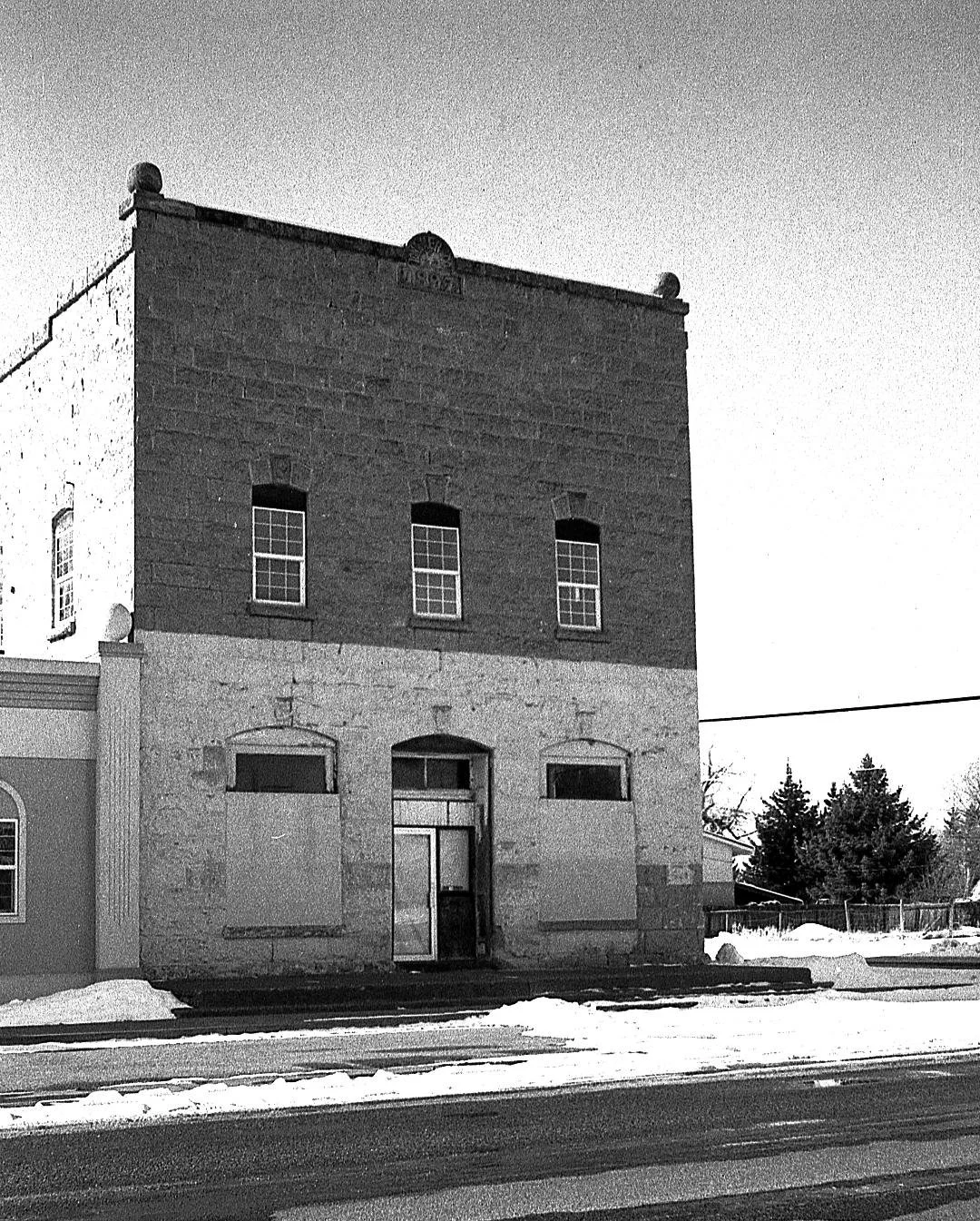
Abandoned building
Olympus introduced the Quickmatic EEM in 1967. The “EEM” stands for electric-eye motorized—a nod to its automatic exposure system and motorized film advance.
This is not your typical plastic Instamatic. The Quickmatic EEM is built with a solid metal body and has a reassuring weight and durability. When I purchased mine on eBay, I made sure to confirm two critical things:
The battery compartment was clean
The motor drive was still functional
Both are essential for this camera to operate as intended.
Lens and Build Quality
At the heart of the Quickmatic EEM is a 4-element Zuiko 36mm f/2.8 lens. And it shows.
The images have a clarity that stands apart from the typical “soft plastic lens” look often associated with 126 cameras. Mine even came fitted with a 43mm UV filter—an unexpected bonus that opens the door to additional filter use.
Other thoughtful upgrades include:
Tripod mount
Cable release compatibility
These are small details, but they signal that Olympus intended this camera to be taken seriously.
Shooting Experience
The viewfinder is simple but effective. It displays zone focus options:
Portrait (3–5 feet)
Group (6–16 feet)
Landscape (16 feet to infinity)
There’s also a built-in light meter. As you half-press the shutter, a red warning appears if the exposure isn’t correct. In some cases, the shutter won’t fire at all if lighting conditions fall outside its limits—a surprisingly advanced safeguard for its time.
A needle in the viewfinder indicates the selected shutter speed, all controlled automatically when set to “A.” The light meter sits around the lens, so it reads accurately even when filters are attached.
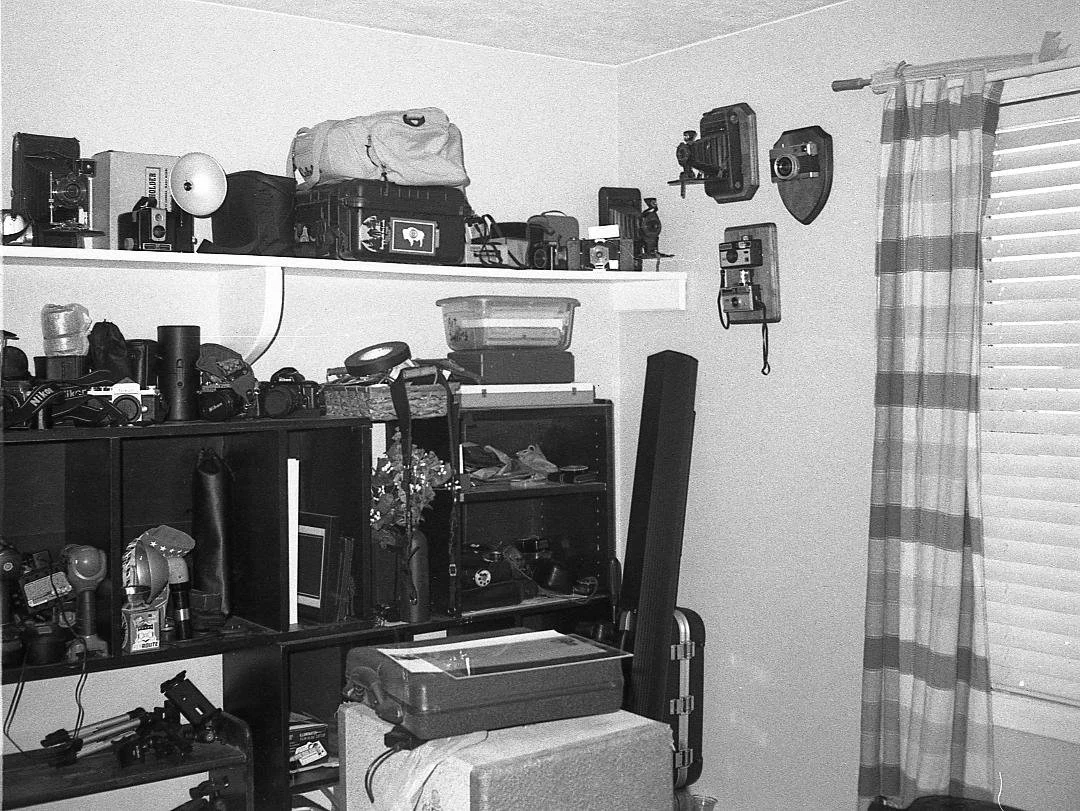
Indoor flash
Flash Performance
The Quickmatic EEM uses 4-sided flash cubes—another nostalgic touch.
To use flash:
Switch to the flash setting
Select your film ASA (64, 80, 125, or 160)
The results are surprisingly good. In fact, I found the black-and-white images taken with flash cubes to have a particularly appealing look—almost vintage documentary in feel.
Film Reloading: Keeping 126 Alive
Since new 126 cartridges are no longer manufactured, I reload my own using film from FPP (Film Photography Project) and original cartridges.
Over time, I’ve refined a process that works reliably:
Reuse and reload original cartridges
Seal edges with gaffer tape
Cover the frame counter window inside and out to prevent light leaks
Tape the camera back when shut and latched for a tighter seal
Even with precautions, light leaks can still occur—especially through the cartridge window. More tape is better.
It may sound like a lot of work, but there’s something deeply satisfying about bringing a nearly 60-year-old camera back to life. I like to think of it as a true Dr. Frankinfilm—a revived piece of photographic history.
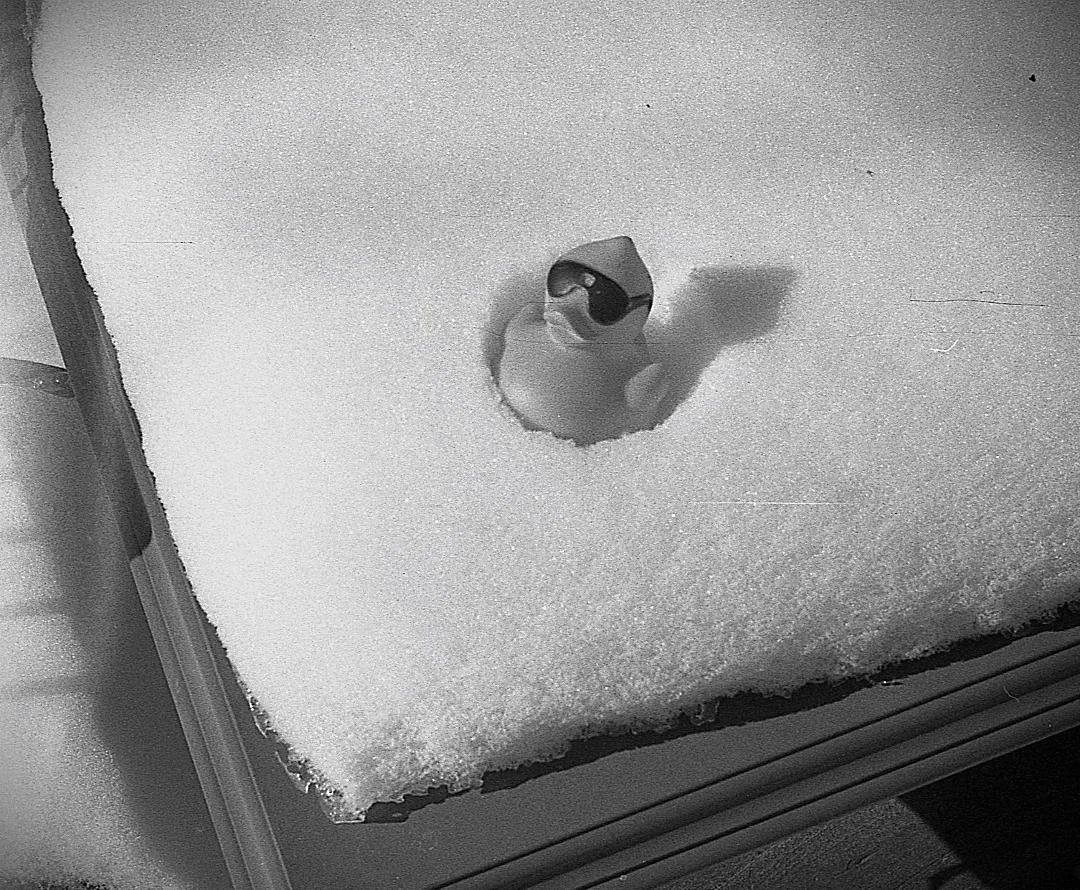
Nice contrast with Kentmere 100
Final Thoughts
The Olympus Quickmatic EEM requires very little compromise. It’s sturdy, efficient, and delivers excellent image quality for the format. The light meter performs well, the lens is sharp, and the overall shooting experience is genuinely enjoyable.
This is a camera I would confidently bring to family gatherings or everyday outings. It doesn’t feel like a novelty—it feels usable.
Have I found the best 126 camera yet?
Not definitively. But I’ve found a very strong contender.
Stay tuned.
Blog #3: The XA 2
Years ago (40 years) I moved to the east coast for a couple years. I took a small compact camera with me. I decided to carry it instead of my heavy, bulky Minolta. It was a small, somewhat inexpensive camera; an Olympus XA2. Not only small, it was lightweight and very simple, but could this device really turn out good pictures? In short, yes.

The XA 2
The XA2 came in a nice hard sturdy plastic box. The instruction manual was included but with the ease, minimal buttons, a few dials and adjustments, this camera seemed very intuitive to use. It seemed cheap and plasticky and I was wondering just how well it would shoot compared to the Minoltas and Pentax’s I had carried before, and how well was it going to hold up being in my pockets and bike bags all the time? In the end I was not disappointed with the XA2 at all.
The little solid camera actually did very well. I shot incredible pictures, and it performed in every environment I was being subjected to. It was dependable. I switched between slides and print film depending on my budget. It is a basic point-and-shoot and very user-friendly. Open the clam-shell lens cover, look through the view finder, and push the button. Even if I had forgotten to adjust for distance or landscape focus, the pictures looked good. The latitude in the 6-element lens was good.

Some describe the camera as an ultra-compact. I would agree and it was easy to fit in a backpack or coat pocket.
The XA2 has some extras as well. There is a self-timer with a 10 second wait. It is easy to set up. The same switch is also a battery check.
The XA series came about around 1979. It quickly became a hit in the point-and-shoot arena. It’s a 35mm camera with a high-quality lens with minimal requirements from the user and is easy to carry and use. To focus there is a basic single person symbol, a group symbol, and a mountain symbol. That’s it for your focus adjustments.
ASA is the only other thing to set, and with ASA from 25 to 800 you have the average film speed options. With the automatic light meter, it gives great shutter speeds to match your lighting needs. A little green or red light on the right, inside the view finder, tells you if you have enough light.
A 35mm compact camera that shoots great pictures every time is a lot of fun. The flash is easy as well. Attach and screw the flash to the camera and then turn it on. It extends the camera’s size sideways about 2 inches but is still very compact. I carried that little camera daily. The flash was strong and the pictures came out even in darker settings.

Even if I had failed to set the correct focusing adjustments, the camera had enough latitude to give me good photos. There seemed to be a bit of vignetting around the photo’s edges, but it was hardly noticeable. In fact, I really didn’t notice it in most of my pictures.
The Olympus XA2 model started in 1981 and then later went to the AX3, and lastly the XA4. With its impressive lens design, these little cameras will never disappoint The images were bright and colorful. This little camera is not a replacement for the larger SLRs, but with good composition and with good contrast, sharp pictures could easily be made into 8x10s.
There have been lots of reviews on this camera series. Articles with specs, limits, weight, shutter speed, and who the designer was (Maitani). Since there were 4 versions (the first one was just XA) there were a few advances along the way in its development. Mine was the XA2 and it was very capable in its ability for my needs. The XA 4 may have been the best model, but any XA camera will perform well.

The price range for used ones today are very reasonable. Rarely will you pay over $100 for a good functioning XA in any model. It is not a disposable camera by any means, and it is rugged enough to give years of service.
Sadly, when I returned from my trip, this little camera companion got turned back over to the landlord who had gotten it for me (Dad).
I recently was able to locate another good working XA2 but it needed new light seals. This wasn’t a hard job, but time consuming. It’s now working well.

I am glad to have this little camera in my camera corral. For just shooting candid and street shots the XA2 is a very easy choice. It’s an easy choice for simple street and vacation photography.
These little cameras have made a small niche for themselves. A camera with great six element lens, with easy knobs and dials, easy shutter that takes remarkable pictures can’t be beat.
They are fun little cameras. I think they are a great little starter camera for someone who wants to get into film. They perform well for any type of snap shots.


Blog # 2: Rescued Film
From Antiques Rise Treasures

It’s almost beginning to be a regular occurrence that I am given an orphaned roll of film. Maybe I look like someone who can do the job, or people hear the excitement and interest in my story telling. Whatever the case, I am beginning to appreciate and search for lost and forgotten rolls of film; a regular gold miner panning for gold.

Thrift Store in Idaho City, Idaho
Last year I strolled into an old thrift store in Idaho City, Idaho looking for old cameras. The owner said, “Sure, there’s a box of them. Make me an offer”. I looked in the old box and sure enough, several old cameras. Well, old being in the 70s. “Make me an offer” she said. The first camera I picked up was an old Kodak 110 Tele Instamatic with a roll of film in it. It had stopped at frame 17. I tried to release the shutter or advance the film but couldn’t make it work. “Will you take $5 for this one?” I asked about the Instamatic. “$5, Sure, its broken and I cant get the film out.” I totally forgot there were other cameras in that box, I paid the money and was out the door. It wasn’t long before I got the film cartridge out and discovered the plastic wheel on the film cartridge was stripped. The thumb advance metal wheel in the camera was fine. I put a new roll of film back in and it was ready to go.

Jukebox Girl
I processed the found film, and my hidden treasures were revealed. Swishing the film around in circles in my “gold pan” revealed I had rescued a family vacation to California’s Golden Gate Bridge at Christmas time. In addition, there were some pictures of some other restaurant visits, some old cars, and other family trips as well. I felt like a time traveler, a regular Dr. Who. My Tardis had taken me back to California to the late 70s (plus or minus). Who and when, we’ll never know, but the history and human-interest stories enrich the journey of camera hunting.

Kodak Autographic Camera
Next I was given a 1918 Kodak Autographic camera that needed a lot of work. What a pearl! It eventually will crank out pictures. But I needed donor parts. I found a “donor” kodak camera from the same era in rough shape and bought it for $10. Imagine my surprise finding an old roll of 124mm film in that donor camera. I sat down and began researching on developing a century-old roll of film.
The research began by asking questions on all the blogs and film web sites I could find. How to safely develop film this old? Rodinal and HC 110 seemed to be the developers of choice for old, outdated film. I bought some HC 110 and then looked to find a large enough reel and tank for 124mm (3.5 inch wide negative) roll film.
It was beginning to get more and more discouraging as I looked for reels, chemicals, tanks, and even advice on developing this roll of film. I had to dig deep but got bits of information. I had several old reels laying around that I knew could be fabricated to work. I superglued an old reel to size to fit the 124mm roll. One day on vacation in Denver, I was given an old Yankee 4x5 paper developing tank. It was large enough to fit the large 124mm reel. I had completed the search. My whole process took over 3 months to research, fabrication, study, prep, and then ordering the developing chemicals.

124mm Film
My chemical prep was HC 110 in a 1:200 dilution. Then came the calculations for time in developer. Several people recommended Verichrome film be developed in highly diluted developer for 2 hours with little agitation. The numbers added up for me and I went with it.
I developed the film in a 2 hour bath. Finally the old roll of film produced one good image.
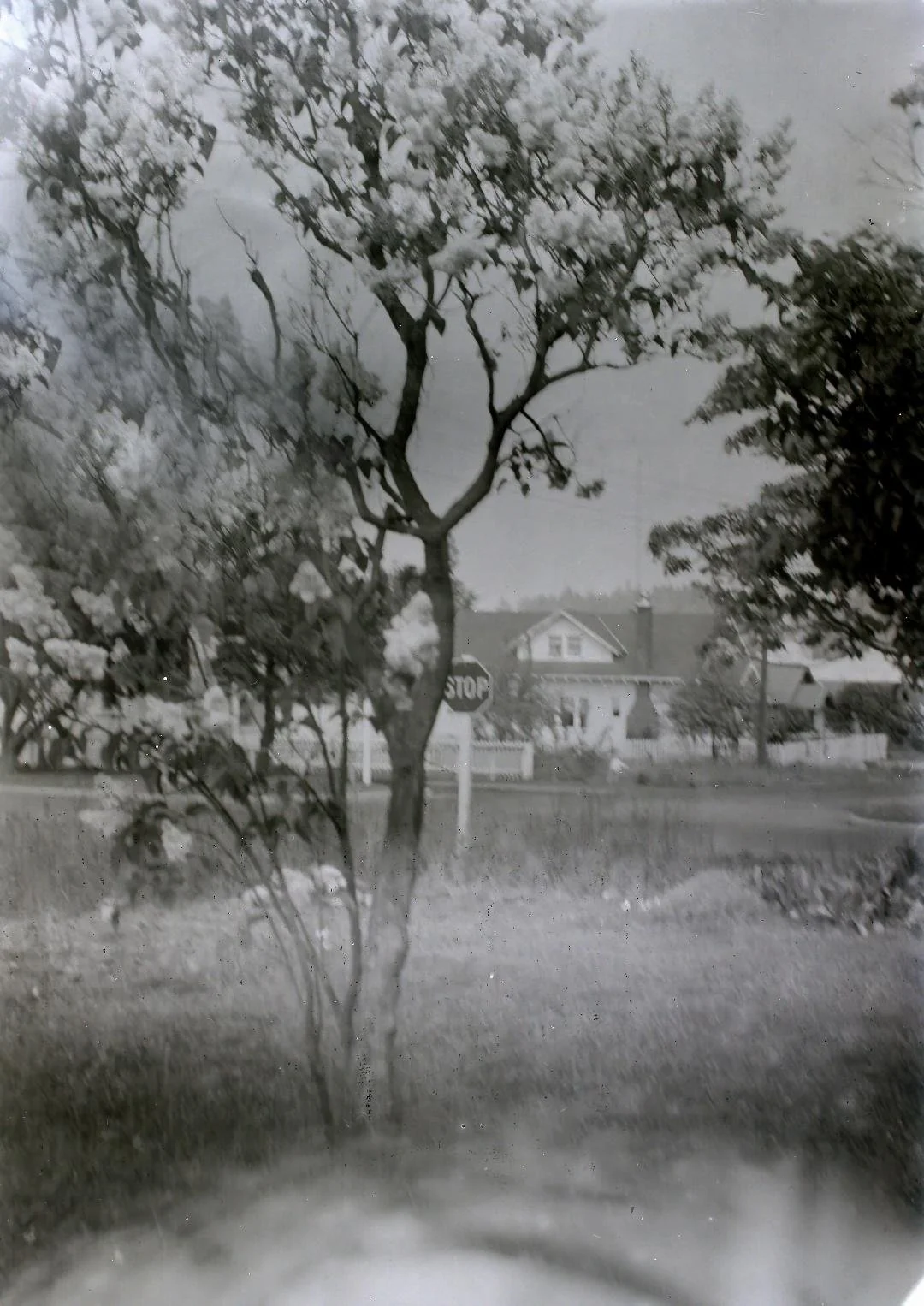
Recovered Image from Kodak Autographic
We see several things from examining this image, but nothing for sure tells us time or place. We see a tree in bloom (lilac maybe), the streets appear flooded, a small kid on a bike, someone on the far right in an apron watching, a forested tree line behind the houses, early architecture of a house, a stop sign (standardized for red and white in 1925), and these things are at first glance. Nothing definitive for sure. If you see some other clues send me a note, but this picture is a great snap-shot in time of some place that may not ever be identified.
In a later blog I will tell the story of getting the repairs completed and then shooting film in another Kodak Autographic.

Recovered Image from 16 Year-Old Disposable Camera
For my next treasure hunt, I was given two early 2000s single-use cameras that had exposed film. One camera had about 16 shots taken. I shot the rest of the roll to see how they would turn out, and then I developed these two rolls of film. I did them in stock C41 and extended the time a few more minutes and got a few images. From studying the images and identifying the relatives, it was determined that these 2 cameras had been sitting around for at least 16 years. These negatives needed some strong luring and scanning to get images. Heat, light leaks, and other things had taken a toll. After sitting in a drawer or car or closet for that long the film had really degraded. But we still got some images and discovered who was in the pictures.

Kodak Flashfun Camera for 127 Format
I am always on the lookout for old cameras. I’m especially on the lookout for film that may be in them. I recently discovered my mother-in-law has an old Kodak Flashfun camera (1962) on her antique shelf. I pulled it down to look at it, and there is an old roll of film still in it with 5 shots taken. Everyone in the family is looking forward to that treasure hunt.
Like the hard work of an old gold miner for one or two small nuggets, this rescue work might produce one or two images. But from developing old film and saving lost pictures I am excited to have my own time machine. I am also hoping to find a picture of Bigfoot, or the Loch Ness Monster .
Be safe and shoot film!

Blog Post # 1: Lets Begin
My First Photo Shoot
My fascination for cameras started near birth. My father worked for a camera store called Inkley’s Photography. He worked in a number of different store locations, but started his photographic journey before that right out of high school.
I have a picture of myself sitting next to a very large Kodak Instamatic 100 on a fireplace hearth. The camera was a window display at Inkley’s. This camera was introduced in 1962 and will be featured in a future issue of Dr. Frankenfilm, but it was this camera and picture that put cameras and film photography in my DNA.

Brownie Playground
For over 60 years I have had some type of camera in my hand. In my early years I was hanging out with my father at sporting events, car race tracks, or just out shooting film. I have a picture of me taking a picture of someone as a photographer with an old box Brownie. No one can seem to remember who took it. I learned early that it was good to always have a camera in hand. It was my father who told me the best camera in the world is the one in your hand.
I remember being in a darkroom way before I could reach the countertop. My father would go to a football game or basketball game, and I was sitting in the seats or loosely following him up and down the court or field. At the race car track, I was in the stands wishing to be in the infield. At an early junior high school age I wanted to be in the pits, but there were too many restrictions and legalities.
I was at the darkroom whenever I could get to it and learning the ropes. The smell of the chemicals and film, the sound of the timer engaging and ticking, and the clank of glass bottles and plastic containers were mesmerizing and addicting to me. In my first year of junior high school, I wandered into the yearbook class and joined the yearbook staff. I had darkroom experience and was ready to keep company in the darkroom. My parents divorced when I was young and for a short time I was separated from my father’s cameras and darkroom adventures. Joining the junior high yearbook staff got me back involved and I could access a darkroom, cameras and film. We were on the poor side and I didn’t have my own camera.
As these blogs continue I will tell tales of camera adventures and disasters. I hope others see through my eyes and words that there is a very creative life in film photography. Most think that film photography is dead. Many would rather buy a digital camera and bypass the development, the darkroom, the chemicals and equipment all together and avoid the 60s and 70s. I, however, love the smell, the sounds, the creativity, the adventures and experiments of film photography. In the future I will tell the tale of film rescues, and finding old lost rolls.
For a short time in the 90s I was slowly turning to digital photography. It seemed that film was dying a slow death and I should be headed to new technology and purchasing a whole new operation. I bought a digital Canon EOS Rebel at a pawn shop and got to work. I even sold (liquidated) most of my film gear. I was sure that film would disappear.
But I couldn’t get the bug in the digital world. I was raised in film and loved the feeling, the complications, and the technique of setting the controls and experiencing the triangle of light for myself. Those who grew up on film can appreciate setting apertures, the film speeds, the shutter speed and the Sunny-16 rule all in your head in a moment’s notice. It becomes second nature.
I would hate to try and guess all the cameras I have owned. Today my camera ownership is around 65. I have them categorized and listed on a spreadsheet. The name, Year of Manufacture, film format, cost to me, where I can find my negatives from that camera and how it has handled so far. I like to run more then one roll through the camera to get an idea of the quality of the camera. All too often the first roll has mistakes and errors. I also develop my own film, and some days are better then others. Sometimes my chemicals are tired, some days the chemical is hot and new. Other days I forget what I’m doing and develop a roll of black and white in color chemicals – it happens. But I try to catalog and become familiar with the camera and what it can do for me. These cameras are actually tools. Like a paint brush that can paint wide strokes, or a brush that does petite strokes, or the types of hair of the bristles, each camera produces a different type and quality of picture. The film is the paint; slow, fast, colored, black and white, grainy or smooth.

Childhood Cameras
What camera is my daily driver? Which camera have I put back on the shelf and not picked back up? Which one have I done the most repairs on? How many different cameras have I used? Do I have a favorite? And what’s my future look like in photography? I want to explore these questions and help students and friends become more familiar with the tools that are out there. You can build a house with the new machinery, levelers, equipment and technical tools. But humans have been building houses for thousands of years without todays modern technology. People are still building houses with 100 year tools because they still work. Returning to the art of photography in film is revisiting and rescuing that skill so it doesn’t disappear from your toolbox.