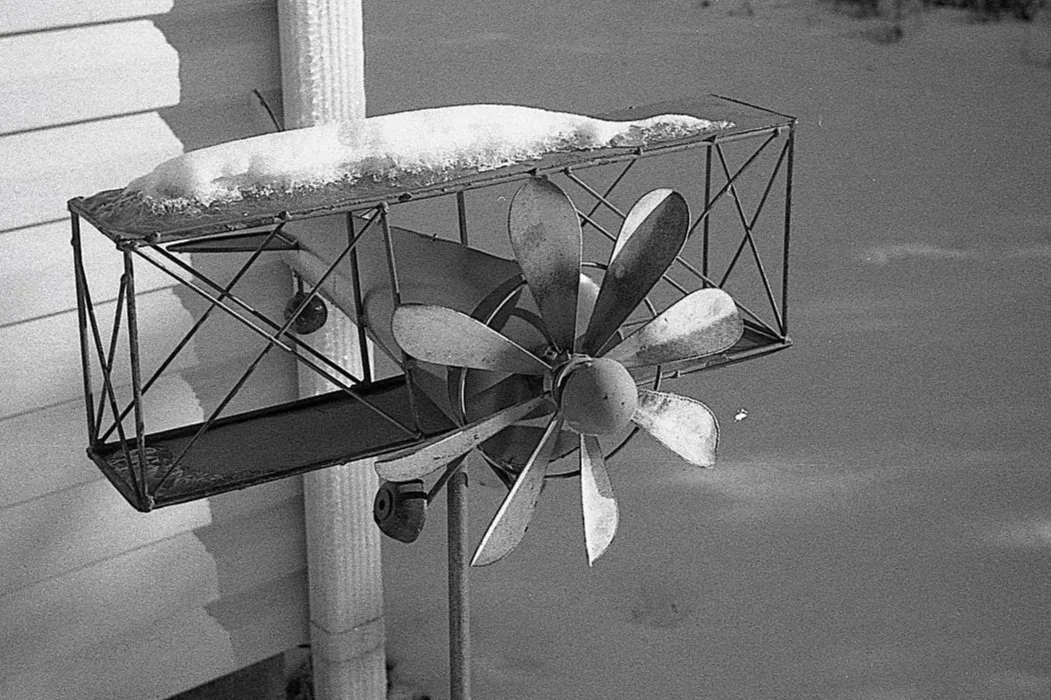
Blog No. 4: Olympus Quickmatic EEM
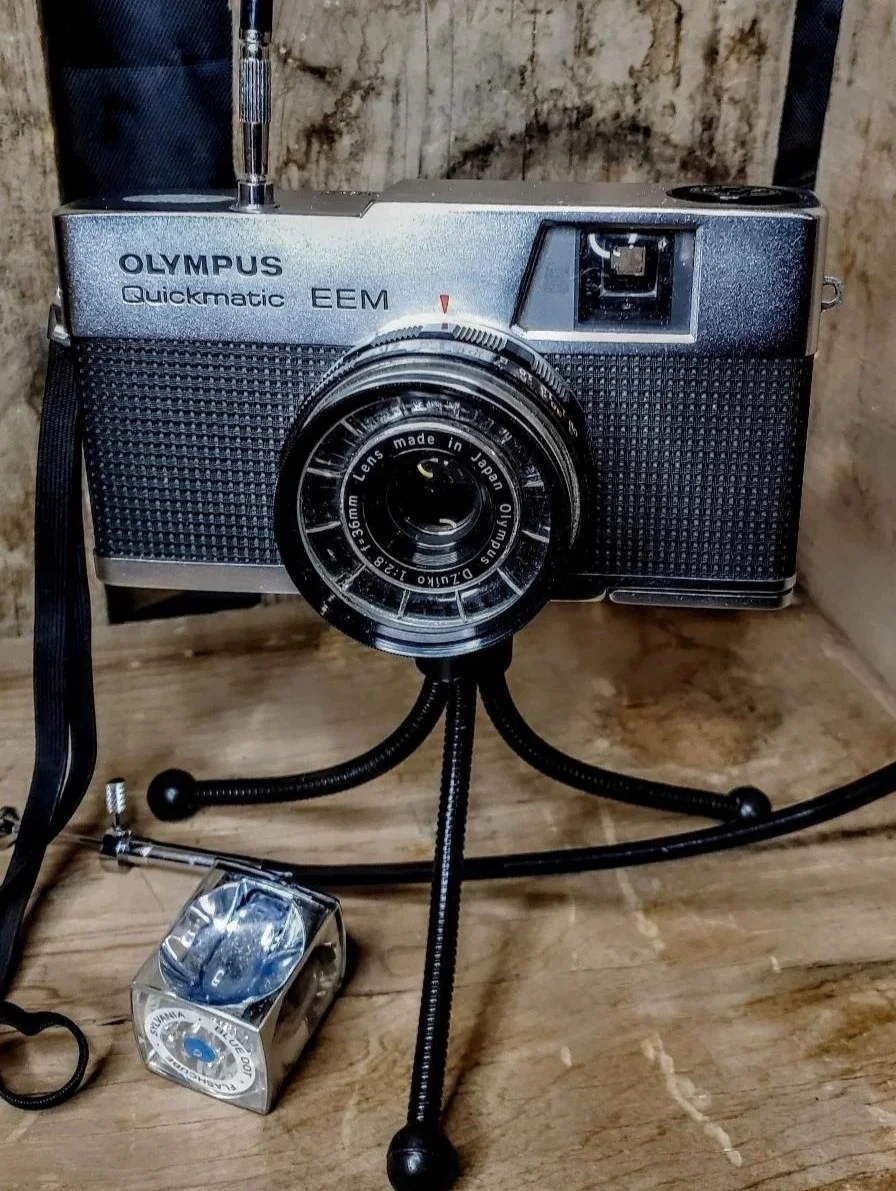
Olympus Quickmatic EEM 126 Cartridge Camera
(Finding the Best 126 Camera — Part II)
I’ve been on a bit of a mission lately—to find the best 126 cartridge camera. Not just any camera, but one that balances ease of use, sharpness, build quality, and aesthetics. In a previous article (Part I), I explored several options, but the search continues. There are, quite literally, hundreds of these little 126 cartridge cameras out there. It seems Kodak tried to corner the market by releasing a new model for every idea they could dream up.
This time, my search led me to the Olympus Quickmatic EEM.

The Rise of 126 Film
Church: Ucon, Idaho
When Kodak introduced the 126 cartridges, simplicity was the goal. Load the film, close the back, and you were ready to shoot. No threading, no fuss. Kodak believed this format would bring photography to the masses—and they were right.
The format exploded in popularity. Camera manufacturers around the world jumped in, and even corporations began branding Instamatic cameras as promotional giveaways. Some film companies went so far as to include processing in the purchase price. For a time, 126 films were everywhere.
Today, those same cameras can be found in thrift stores for just a few dollars. Most were built with plastic lenses and minimal controls—perfect for casual snapshots, but far from professional tools. Still, they filled an important niche. They taught an entire generation how to shoot film, how to be intentional, and how to make each frame count.
While 126 film is no longer commercially produced, it hasn’t disappeared. With a bit of effort, you can reload old cartridges and keep these cameras alive.
A Step Toward Quality
By the mid-to-late 1960s, companies like Minolta, Olympus, Zeiss Ikon, Yashica, and even Sears began asking an interesting question:
Could 126 be more than just a consumer format?
Some of these manufacturers attempted to elevate the platform—adding better lenses, improved build quality, and more refined controls. I set out to find one of these “higher-end” 126 cameras.
Enter the Olympus Quickmatic EEM (1967)
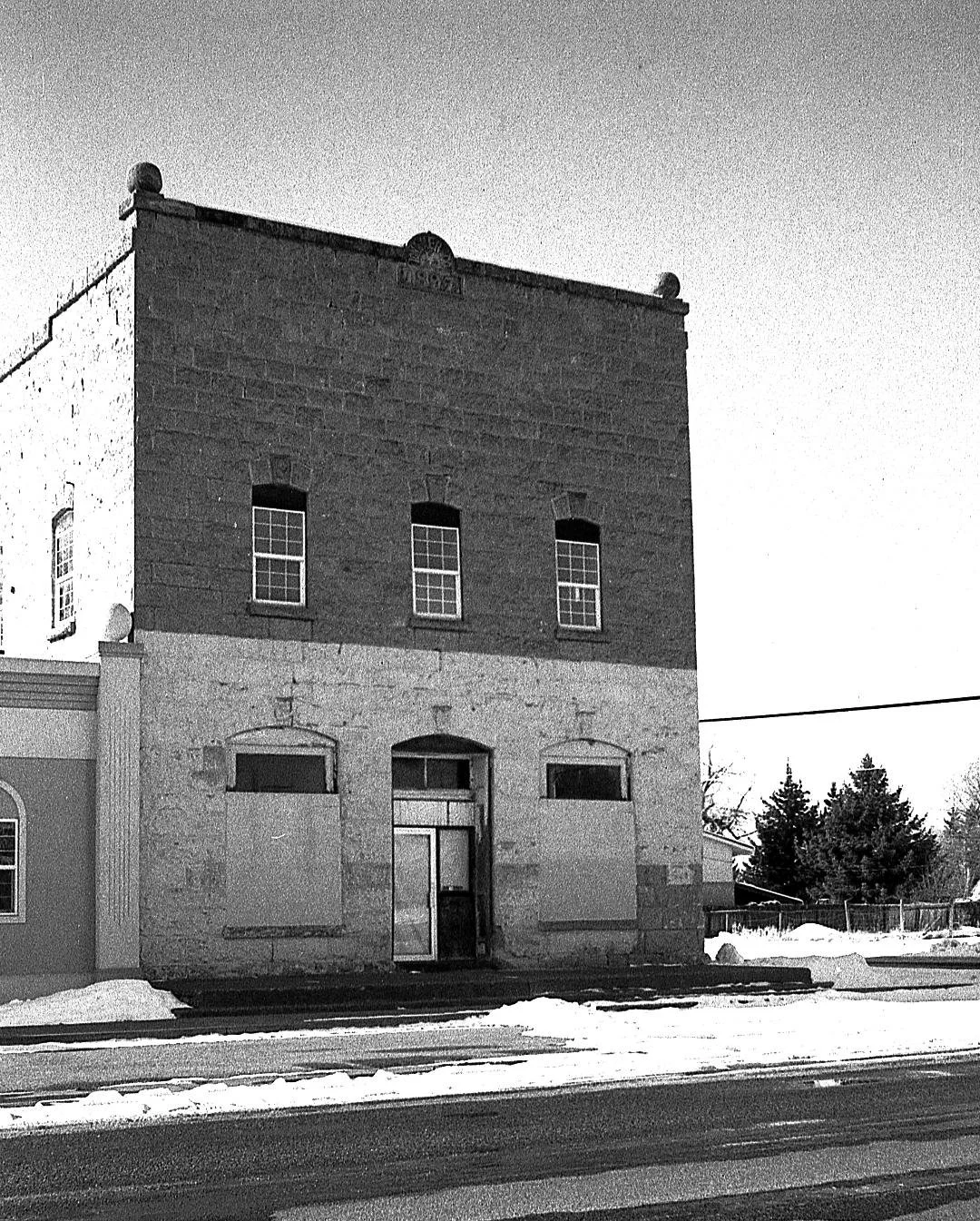
Abandoned building
Olympus introduced the Quickmatic EEM in 1967. The “EEM” stands for electric-eye motorized—a nod to its automatic exposure system and motorized film advance.
This is not your typical plastic Instamatic. The Quickmatic EEM is built with a solid metal body and has a reassuring weight and durability. When I purchased mine on eBay, I made sure to confirm two critical things:
The battery compartment was clean
The motor drive was still functional
Both are essential for this camera to operate as intended.
Lens and Build Quality
At the heart of the Quickmatic EEM is a 4-element Zuiko 36mm f/2.8 lens. And it shows.
The images have a clarity that stands apart from the typical “soft plastic lens” look often associated with 126 cameras. Mine even came fitted with a 43mm UV filter—an unexpected bonus that opens the door to additional filter use.
Other thoughtful upgrades include:
Tripod mount
Cable release compatibility
These are small details, but they signal that Olympus intended this camera to be taken seriously.
Shooting Experience
The viewfinder is simple but effective. It displays zone focus options:
Portrait (3–5 feet)
Group (6–16 feet)
Landscape (16 feet to infinity)
There’s also a built-in light meter. As you half-press the shutter, a red warning appears if the exposure isn’t correct. In some cases, the shutter won’t fire at all if lighting conditions fall outside its limits—a surprisingly advanced safeguard for its time.
A needle in the viewfinder indicates the selected shutter speed, all controlled automatically when set to “A.” The light meter sits around the lens, so it reads accurately even when filters are attached.
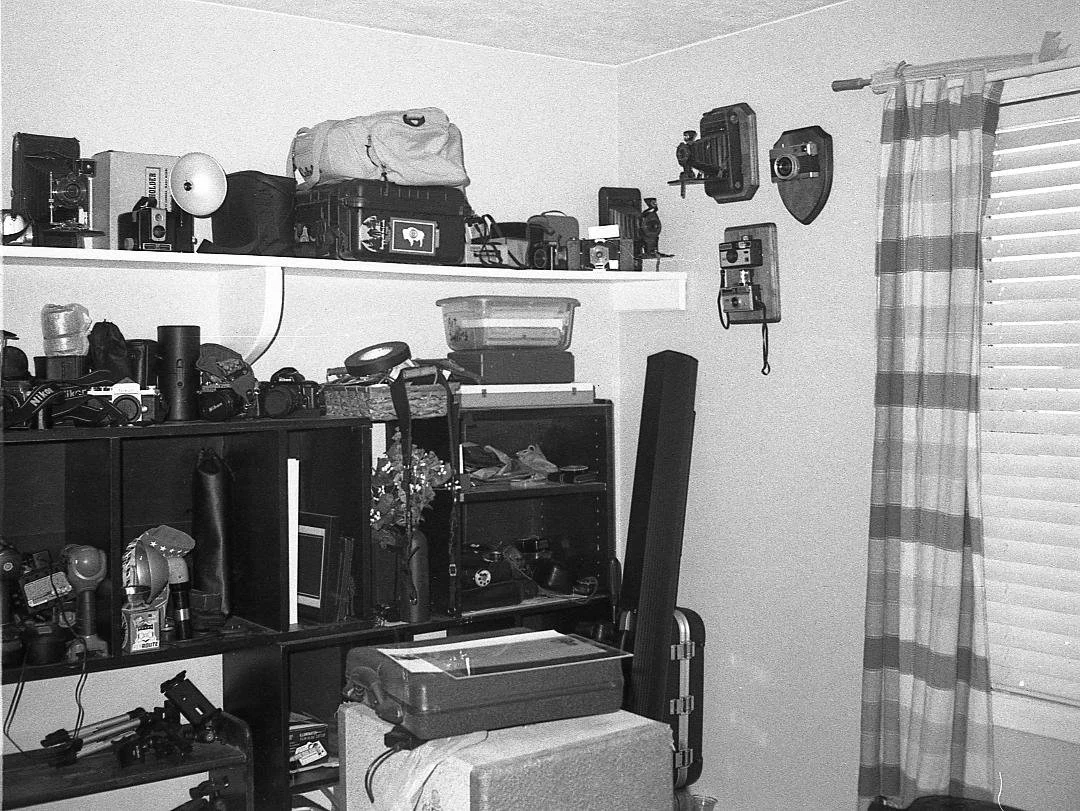
Indoor flash
Flash Performance
The Quickmatic EEM uses 4-sided flash cubes—another nostalgic touch.
To use flash:
Switch to the flash setting
Select your film ASA (64, 80, 125, or 160)
The results are surprisingly good. In fact, I found the black-and-white images taken with flash cubes to have a particularly appealing look—almost vintage documentary in feel.
Film Reloading: Keeping 126 Alive
Since new 126 cartridges are no longer manufactured, I reload my own using film from FPP (Film Photography Project) and original cartridges.
Over time, I’ve refined a process that works reliably:
Reuse and reload original cartridges
Seal edges with gaffer tape
Cover the frame counter window inside and out to prevent light leaks
Tape the camera back when shut and latched for a tighter seal
Even with precautions, light leaks can still occur—especially through the cartridge window. More tape is better.
It may sound like a lot of work, but there’s something deeply satisfying about bringing a nearly 60-year-old camera back to life. I like to think of it as a true Dr. Frankinfilm—a revived piece of photographic history.

Nice contrast with Kentmere 100
Final Thoughts
The Olympus Quickmatic EEM requires very little compromise. It’s sturdy, efficient, and delivers excellent image quality for the format. The light meter performs well, the lens is sharp, and the overall shooting experience is genuinely enjoyable.
This is a camera I would confidently bring to family gatherings or everyday outings. It doesn’t feel like a novelty—it feels usable.
Have I found the best 126 camera yet?
Not definitively. But I’ve found a very strong contender.
Stay tuned.